
What Is the Freedom of Information Act (FOIA)? A Complete Guide
The Freedom of Information Act (FOIA) is a United States federal transparency law that allows the public to request access to records held by federal government agencies. Congress enacted FOIA in 1966 to promote open government, public accountability, and transparency in federal institutions.
Under the law, journalists, researchers, advocacy organizations, and ordinary citizens may request government documents such as emails, reports, policy memos, and internal communications. Federal agencies must disclose these records unless the information falls under specific legal exemptions related to national security, privacy, or law enforcement. The Freedom of Information Act remains one of the most important public records laws in the United States and plays a critical role in government oversight and investigative journalism.
What Is the Freedom of Information Act?
The Freedom of Information (FOIA) is a federal transparency statute that gives the public the legal right to request records from executive branch agencies of the United States government. The law requires federal agencies to search for requested records and release them unless the information falls within one of nine statutory exemptions. These exemptions protect sensitive materials such as classified national security records, trade secrets, and certain law enforcement investigations.
Congress designed FOIA to ensure that government operations remain visible to the public. Access to official records allows citizens to monitor how federal agencies develop policies, allocate public resources, and implement administrative decisions. Federal courts enforce FOIA. When agencies refuse to release requested records or fail to respond within the legal timeframe, requesters may file FOIA lawsuits in federal district court to compel disclosure.
Why the Freedom of Information Act Matters
The Freedom of Information Act plays a central role in democratic accountability and government transparency. Public access to government records helps journalists, researchers, and oversight organizations analyze official actions.
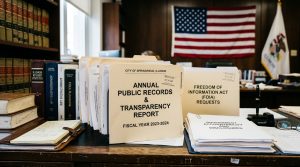
Several benefits explain why FOIA remains a powerful transparency tool.
Government Accountability
Public records help citizens understand how federal agencies operate and whether officials follow legal procedures.
Investigative Journalism
News organizations often rely on FOIA requests to uncover documents related to policy decisions, regulatory enforcement, and government spending.
Public Policy Research
Academic researchers and public policy experts use FOIA records to analyze government programs and evaluate their effectiveness.
Legal Oversight
Transparency laws help watchdog organizations monitor government agencies and challenge potential misconduct.
Organizations such as American Oversight, Citizens for Responsibility and Ethics in Washington (CREW), and the National Security Archive frequently rely on FOIA to investigate federal decision-making. Without FOIA, many internal government communications and policy records would remain inaccessible to the public.
Which Agencies Must Comply With FOIA?
FOIA primarily applies to federal executive branch agencies. These agencies must respond to requests for records that exist within their possession and control.
Examples of agencies subject to FOIA include:
- Department of Justice
- Department of Defense
- Department of Homeland Security
- Environmental Protection Agency
- Federal Bureau of Investigation
- Securities and Exchange Commission
However, FOIA does not apply to every government entity. Certain institutions remain outside the law’s scope.
Entities generally exempt from FOIA include:
- Congress
- Federal courts
- The President’s immediate staff
- Private companies and organizations
Courts sometimes evaluate whether a government unit qualifies as a federal agency under FOIA. This issue frequently appears in transparency disputes involving advisory bodies inside the Executive Office of the President. Courts sometimes evaluate whether a government unit qualifies as a federal agency under FOIA. This issue appears frequently in transparency litigation involving advisory bodies within the Executive Office of the President. Recent transparency disputes, such as the DOGE transparency FOIA lawsuit, highlight how courts determine whether government entities must release records under federal disclosure laws.
For example, modern transparency cases such as the DOGE transparency FOIA lawsuit examine whether emerging policy units must comply with federal disclosure requirements.
How a FOIA Request Works

The FOIA process allows individuals or organizations to request government records through a formal submission to a federal agency.
The typical process includes several steps.
Identify the Agency
The requester must determine which federal agency likely holds the desired records.
Submit a Written Request
A FOIA request must describe the requested records with reasonable specificity. Requests usually include date ranges, subject areas, or communication types.
Many requests can be submitted electronically through the official FOIA.gov portal, which connects requesters with federal agency FOIA offices.
Agency Review
The agency reviews the request and searches its internal records systems.
Response From the Agency
The agency may:
- Release the records
- Release partial records
- deny the request
- request clarification
Administrative Appeal
If the agency denies the request, the requester may file an internal appeal.
Federal Court Lawsuit
If the appeal fails, the requester may file a FOIA lawsuit in federal court to compel disclosure.
Examples of Information Obtained Through FOIA
Many major investigations and government oversight reports rely on documents obtained through FOIA requests.
Examples of records frequently obtained through FOIA include:
- Internal government emails between officials
- Policy briefing documents and internal reports
- Regulatory enforcement records
- Communications between agencies and private companies
- Government contracts and procurement records
- Internal policy memos and strategy documents
Journalists and advocacy groups often use these records to analyze how government agencies make decisions and coordinate with other institutions. Transparency organizations and investigative reporters frequently rely on FOIA disclosures to uncover information about government programs, national security policies, and administrative reforms.
FOIA Exemptions Explained
Although FOIA promotes transparency, the law also protects certain categories of sensitive information. Federal agencies may withhold records that fall under specific statutory exemptions.
The law includes nine major exemptions.
National Security Information
Records related to national defense or classified intelligence.
Internal Agency Rules and Practices
Certain internal administrative materials.
Information Protected by Other Federal Laws
Records restricted by separate statutes.
Trade Secrets and Commercial Data
Confidential business information submitted to government agencies.
Internal Government Communications
Pre-decisional policy discussions within agencies.
Personal Privacy Records
Information that could invade personal privacy.
Law Enforcement Investigations
Records related to ongoing investigations or enforcement activity.
Financial Institution Records
Certain records related to banking supervision.
Geological and Natural Resource Data
Sensitive data about natural resources.
These exemptions attempt to balance government transparency with privacy, national security, and operational integrity.
How Long Do Agencies Have to Respond to FOIA Requests?
Under federal law, agencies typically must respond to FOIA requests within 20 working days. However, complex requests often require additional processing time.
Several factors can delay responses:
- large volumes of requested records
- consultation with other agencies
- classification review
- redaction of sensitive information
Many agencies process requests using a first-in, first-out system, although expedited processing may apply in urgent cases involving public interest or media reporting.
What Is a FOIA Lawsuit?
A FOIA lawsuit occurs when a requester challenges a government agency’s refusal to release records. The requester files a lawsuit in the federal district court. Judges then review whether the agency properly applied FOIA exemptions or failed to comply with disclosure requirements.
Courts may order agencies to release withheld records if they determine that the law requires disclosure. FOIA litigation plays a significant role in government transparency and administrative law. Many major transparency disputes eventually reach federal courts, where judges interpret the scope of FOIA obligations.
Famous FOIA Cases That Shaped Transparency Law
Several landmark cases have shaped how courts interpret the Freedom of Information Act.
Department of Justice v. Reporters Committee for Freedom of the Press (1989)
The Supreme Court addressed privacy protections related to criminal history records.
NLRB v. Sears, Roebuck & Co. (1975)
The Court clarified the limits of the internal government communications exemption.
Milner v. Department of the Navy (2011)
The Court narrowed the interpretation of internal agency exemptions.
These decisions help define the boundaries between transparency and confidentiality in federal government operations.
Challenges With the FOIA System
Despite its importance, FOIA faces several operational challenges. Many agencies experience large backlogs of requests. Processing delays sometimes extend for months or even years. Complex requests that involve thousands of documents require significant review time.
Budget limitations also affect agency response capacity. FOIA offices within agencies often operate with limited staff and resources. Digital records management has improved access in recent years, but the growing volume of electronic communication creates new challenges for records searches. Transparency advocates continue to push for reforms that improve response times and strengthen disclosure obligations.
The Future of FOIA and Government Transparency
The Freedom of Information Act continues to evolve as courts interpret the law and Congress considers reforms. Digital government systems have expanded the volume of records that agencies manage.
Modern transparency debates now involve:
- digital communications and emails
- government databases and internal systems
- private sector collaboration with federal agencies
- emerging policy units inside the executive branch
Courts increasingly examine whether new government structures fall within FOIA’s legal definition of an agency. These disputes may shape the future scope of federal transparency law and administrative oversight.
The Freedom of Information Act remains one of the most important legal tools for public oversight and open government. Its continued enforcement helps ensure that federal institutions remain accountable to the citizens they serve.
FAQs
What is the Freedom of Information Act?
The Freedom of Information Act is a U.S. federal law that allows the public to request access to records held by federal government agencies.
Who can file a FOIA request?
Any person, journalist, organization, or researcher may submit a FOIA request to a federal agency.
Can an agency deny a FOIA request?
Yes. Agencies may deny requests if the records fall under one of the nine FOIA exemptions.
What happens if an agency refuses to release records?
The requester may file an administrative appeal or bring a FOIA lawsuit in federal court.

Sadia Parveen is a content writer at ClassAction24.com who creates informational articles on class action lawsuits, consumer protection matters, and legal developments. Her work focuses on researching public court records, official filings, and reputable news sources, then presenting it in a clear and neutral format for general readers. Her articles follow the ClassAction24.com editorial policy and are reviewed by an editor before publication. She does not provide legal advice or professional legal services.

Musarat Bano serves as an editor at ClassAction24.com. She reviews articles for accuracy, sourcing, clarity, and editorial consistency before publication. She checks that legal claims trace back to public court records, official filings, and reputable news sources, and that reported claims are clearly separated from confirmed facts. Her role is limited to editorial review and presentation, and she does not provide legal advice or professional legal services.