
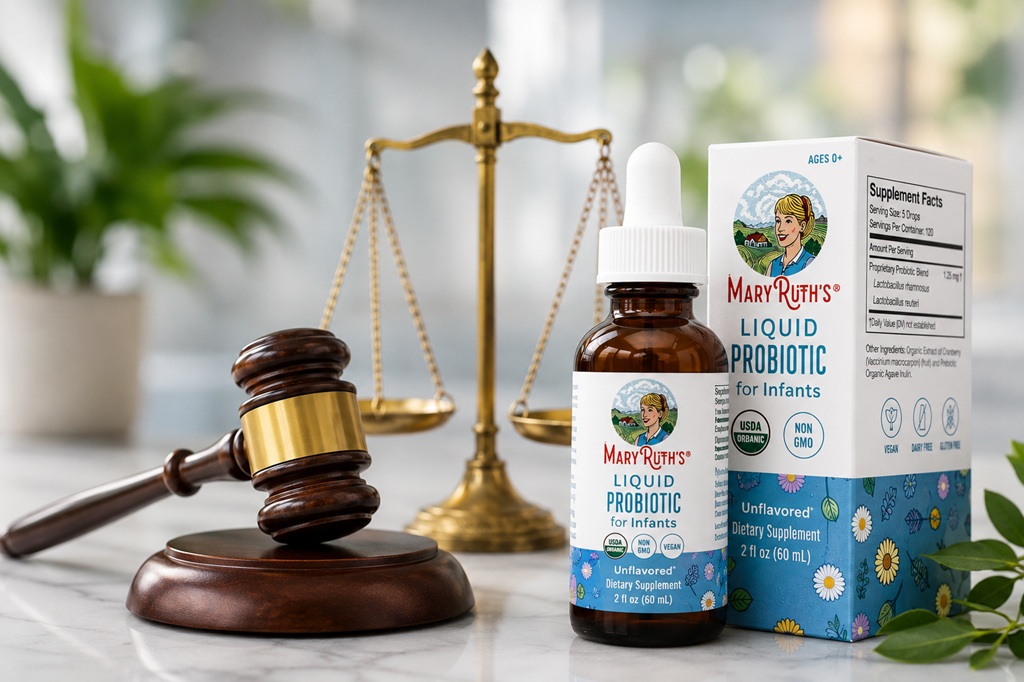
MaryRuth Organics Lawsuit: Recall, Legal Claims & 2026 Updates
Consumers continue to search terms like “MaryRuth Organics lawsuit,” “MaryRuth probiotic recall,” and “MaryRuth FDA recall” across Google and social media platforms. Many parents want answers after MaryRuth Organics recalled an infant probiotic product in 2021 over possible contamination concerns linked to Pseudomonas aeruginosa.
Public attention increased because the recalled supplement targeted infants and young children. The controversy also raised broader concerns about dietary supplement safety, manufacturing standards, contamination prevention, and FDA oversight in the wellness industry.
Quick Answer
The “MaryRuth Organics lawsuit” topic mainly relates to the 2021 infant probiotic recall connected to possible bacterial contamination concerns. Public records confirm the recall and a separate trademark dispute involving Doctor Danielle supplements. However, verified nationwide class action litigation tied directly to the recall remains limited as of 2026.
Consumers continue to search for answers about supplement safety, FDA recalls, contamination risks, subscription billing complaints, and possible legal claims connected to MaryRuth Organics.
Key Facts
- MaryRuth Organics recalled an infant liquid probiotic product in 2021
- The recall involved possible contamination linked to Pseudomonas aeruginosa
- The recalled supplement targeted infants and young children
- Consumers raised concerns about product safety and quality control
- Public records confirm a separate trademark dispute in 2022
- Verified nationwide class action litigation remains limited as of 2026
- Online discussions also mention subscription billing investigations
- Search interest continues across recall, contamination, and lawsuit-related topics
What Is the MaryRuth Organics Lawsuit About?
The phrase “MaryRuth Organics lawsuit” does not refer to one single legal case. Several separate events now appear under the same search term. Most online discussions focus on the 2021 infant probiotic recall. Some articles also mention a trademark dispute connected to Doctor Danielle supplements. Others discuss possible false advertising concerns or subscription billing complaints.
That overlap created confusion across search results. Many readers now assume the company faces one massive class action lawsuit. Public records do not clearly show that situation at this time.
MaryRuth Organics became a popular supplement brand through organic vitamins, probiotics, liquid minerals, and wellness products. Parents and health-conscious consumers formed a large part of the company’s customer base. That fact increased public attention after the infant probiotic recall surfaced online.
The controversy expanded quickly because infant products involve sensitive health concerns. Parents expect strict safety standards in products designed for babies and toddlers. News coverage and social media discussions pushed the topic into mainstream search traffic soon after the recall announcement. Another important detail often gets ignored. A recall does not automatically mean a lawsuit exists. Companies sometimes issue recalls as precautionary safety measures. Some recalls later trigger litigation. Others never reach court.
MaryRuth Infant Probiotic Recall Explained
The 2021 recall remains the most important event connected to MaryRuth Organics legal discussions. The company recalled MaryRuth’s Liquid Probiotic for Infants after possible contamination concerns linked to Pseudomonas aeruginosa. Health experts recognize this bacterium as a potential risk, especially for infants and people with weakened immune systems.
The recall gained attention because the product targeted babies. Parents immediately raised concerns about product safety, manufacturing standards, and contamination prevention.
Reports stated that the probiotic product sold through major retailers and online marketplaces. Consumers reportedly purchased the supplement through Amazon, Target, and the company’s own website. That wide distribution increased public visibility once recall notices appeared online.
Official recall information identified specific lot numbers tied to the contamination concern. Consumers received instructions to stop product use immediately and review packaging information carefully. Federal safety records and retailer notices helped spread public awareness after the recall announcement. Consumers searched FDA databases and recall alerts for information about affected lot numbers, contamination risks, and infant safety concerns. Public discussions also increased around supplement manufacturing practices and quality assurance procedures.
The contamination issue created serious concern because infants face greater vulnerability to infections and digestive complications. Doctors often monitor bacterial exposure carefully in newborns and young children. Public reaction intensified once media outlets connected the recall to infant health risks.
Search interest quickly expanded across phrases like:
- “MaryRuth infant probiotic contamination”
- “MaryRuth FDA recall”
- “MaryRuth probiotic lawsuit”
- “MaryRuth recall symptoms”
Many parents wanted to know whether children became sick after exposure. Public reporting mainly focused on contamination risk and recall procedures rather than confirmed widespread injuries. The recall eventually became the foundation for broader legal speculation online. Several blogs later began to discuss possible lawsuits, consumer claims, and supplement safety concerns connected to the incident.
Is There a MaryRuth Organics Class Action Lawsuit?
Many websites now mention a “MaryRuth Organics class action lawsuit.” Still, verified public information remains limited. Several legal blogs discuss possible litigation theories connected to the infant probiotic recall. Some pages reference consumer protection concerns, contamination claims, and negligence arguments. However, public court records do not clearly show a dominant nationwide class action tied directly to the recall.
That distinction matters because many readers assume a lawsuit already reached settlement stages. Public evidence does not strongly support those assumptions.
Law firms often investigate recalls before any formal lawsuit begins. An investigation simply means attorneys review consumer complaints and possible legal claims. That process does not confirm court filings, settlements, or liability findings. Product recalls sometimes trigger consumer protection lawsuits, negligence claims, or product liability litigation. Legal investigations often begin after consumers report injuries, contamination concerns, or financial losses connected to recalled products. However, investigations alone do not confirm liability, settlements, or certified class action lawsuits.
Many competitor articles blur that line. Some pages use dramatic headlines that suggest active litigation already exists. The actual legal picture appears far more limited based on currently available records. Consumer concern still remains understandable. Parents questioned how contamination entered a probiotic product designed for infants. Others asked whether stronger quality control measures could have prevented the recall.
The supplement industry already faces growing scrutiny across product safety and manufacturing standards. That larger industry pressure increased public attention around the MaryRuth Organics controversy.
Search traffic also continues because consumers want simple answers to difficult questions. People often search:
“Is MaryRuth Organics facing a lawsuit?”
“Can consumers join a class action?”
“Was the recalled probiotic dangerous?”
Many online articles fail to answer those questions carefully. Instead, they repeat speculation without clear legal verification.
Doctor Danielle vs MaryRuth Organics Trademark Dispute
Another issue connected to MaryRuth Organics involved a trademark dispute rather than a contamination lawsuit. The Doctor Danielle case focused on branding and intellectual property concerns. Product safety did not drive the dispute. However, many readers now confuse the trademark litigation with the infant probiotic recall. That confusion partly exists because several blogs combine both stories under the same “MaryRuth lawsuit” topic.
Reports state that Doctor Danielle raised legal claims connected to branding similarities and trademark-related concerns. The dispute reportedly centered on intellectual property and market identity issues rather than contamination allegations. The case later reached dismissal in 2022 according to multiple reports. Several competitor articles mention the dismissal but provide little explanation about the legal context behind it.
This case matters because it represents a completely different category of litigation. Trademark disputes usually involve:
- branding conflicts
- intellectual property rights
- business identity concerns
- marketing confusion claims
Contamination recalls and consumer safety lawsuits involve entirely separate legal standards. Many readers now incorrectly assume every MaryRuth legal issue involved unsafe supplements. Public information does not support that conclusion.
Are False Advertising Claims Against MaryRuth Organics Verified?
Some websites now discuss possible false advertising concerns connected to MaryRuth Organics products. However, many of those claims remain difficult to verify through confirmed court filings.
Several blogs mention issues related to:
- supplement marketing
- health benefit claims
- labeling accuracy
- consumer transparency
Still, many articles provide limited evidence beyond general commentary or speculation. The dietary supplement industry regularly faces scrutiny over marketing language, labeling accuracy, and health benefit claims. Federal regulators and consumer protection laws require companies to avoid misleading advertising practices and unsupported medical claims.
That situation highlights a major problem across legal content online. Some websites use aggressive lawsuit headlines even when verified litigation remains unclear. Readers often mistake investigations or consumer complaints as proof of active lawsuits.
Verification matters heavily in legal and health reporting. Accurate reporting should separate:
- confirmed court actions
- investigations
- consumer complaints
- online rumors
- opinion-based commentary
The supplement industry already faces regular scrutiny over advertising practices and ingredient claims. Consumers now pay closer attention to label accuracy and scientific support behind wellness products. That broader industry trend also contributes to ongoing interest around MaryRuth Organics legal discussions.
MaryRuth Organics Subscription Billing Investigation
Recent online discussions also mention subscription billing concerns connected to MaryRuth Organics. Some legal websites reference an auto-renewal investigation related to recurring billing practices. Public discussions mainly focus on subscription transparency and cancellation procedures.
Consumers across many industries now report frustration over recurring subscription systems. Supplement brands also face complaints involving automatic charges and difficult cancellation processes.
Public information currently describes the matter as an investigation rather than a finalized lawsuit. That difference remains important. Recurring billing complaints have increased across the wellness and subscription-commerce industries in recent years. Consumers now pay closer attention to cancellation policies, automatic renewal disclosures, refund practices, and subscription transparency requirements.
An investigation does not automatically prove legal violations occurred. Law firms often review customer complaints before deciding whether litigation should move forward.
Several readers now search:
- “MaryRuth subscription lawsuit”
- “MaryRuth auto renewal complaints”
- “MaryRuth recurring billing issue”
Search interest reflects larger consumer frustration around subscription-based wellness products and online recurring payment systems.
How the Recall Affected Consumer Trust in MaryRuth Organics
The infant probiotic recall created long-term reputation concerns for the brand. Parents expressed strong reactions because infant supplements require high levels of trust. Many consumers questioned manufacturing oversight and contamination prevention standards after the recall announcement.
Online reviews and social discussions became divided. Some customers continued to support the company and its products. Others raised concerns about transparency and quality control.
The controversy also increased attention on supplement regulation in general. Consumers now ask more questions about:
- product testing
- manufacturing standards
- contamination risks
- ingredient sourcing
- quality assurance
Retailers also responded quickly after recall notices appeared. Major online marketplaces and stores removed affected products from sale once contamination concerns surfaced publicly. Trust often becomes difficult to rebuild after infant product recalls. Parents usually expect immediate communication and strong safety protections in products marketed toward children.
What Consumers Should Do After a Supplement Recall
Consumers should act carefully after any supplement recall announcement. Parents especially should review product information closely when infant products become involved. Official recall notices usually include lot numbers, expiration details, and UPC information. Consumers should compare packaging details against recall data as soon as possible.
Medical guidance may become necessary if a child develops unusual symptoms after product exposure. Doctors can evaluate potential risks and recommend proper next steps. Consumers can also submit reports through FDA MedWatch systems and retailer complaint channels. Regulatory agencies often rely on consumer reports during safety investigations.
Documentation also matters. Receipts, packaging photographs, lot numbers, and medical records may help support future claims or investigations if additional legal developments appear later.
Latest MaryRuth Organics Lawsuit Updates in 2026
Public discussion around MaryRuth Organics continues in 2026. Search interest remains active because many consumers still want clarity about recalls, lawsuits, and supplement safety concerns.
Current public information mainly points toward:
- the 2021 infant probiotic recall
- the Doctor Danielle trademark dispute
- subscription billing investigations
- broader supplement marketing concerns
Public court records still do not clearly confirm a major nationwide consumer class action tied directly to the probiotic recall. Several online articles continue to exaggerate or speculate about legal developments. Readers should rely on verified court filings, official recall notices, and trusted reporting sources instead of dramatic headlines.
The supplement industry will likely continue to face stronger scrutiny in areas such as:
- contamination prevention
- subscription transparency
- health marketing claims
- quality control standards
Consumers should continue monitoring official recall databases and verified legal updates rather than relying entirely on viral social media discussions.
FAQs
Are MaryRuth Vitamins FDA Approved?
MaryRuth vitamins do not receive FDA approval before sale because dietary supplements follow different rules than prescription drugs. The FDA regulates supplement safety and labeling, but it usually does not approve vitamins before they enter the market.
Is MaryRuth Organics a Good Brand?
MaryRuth Organics has a strong reputation in the wellness market. Many consumers like the brand because it offers vegan, non-GMO, and family-focused supplements. However, some consumers raised safety concerns after the 2021 infant probiotic recall.
Is MaryRuth a Clean Brand?
Many consumers consider MaryRuth Organics a clean supplement brand because the company promotes organic, vegan, gluten-free, and non-GMO products. Still, no official legal definition exists for the phrase “clean brand” in the supplement industry.
Who Is the CEO of MaryRuth Organics?
MaryRuth Ghiyam is the founder and CEO of MaryRuth Organics. She helped build the company around wellness, nutrition, and family health products.
Final Thoughts
The “MaryRuth Organics lawsuit” topic includes several separate legal and consumer issues. Many websites combine recalls, trademark disputes, investigations, and rumors into one confusing story. Public records clearly confirm the 2021 infant probiotic recall involving possible bacterial contamination concerns and a separate trademark dispute connected to MaryRuth Organics. However, verified nationwide class action litigation remains limited based on currently available court records and public filings.
Consumers should rely on official recall notices, FDA safety information, verified legal filings, and trusted reporting sources instead of online speculation or exaggerated lawsuit headlines. Clear reporting helps readers separate facts from speculation. That distinction remains important as discussions around MaryRuth Organics continue in 2026.

Sadia Parveen is a content writer at ClassAction24.com who creates informational articles on class action lawsuits, consumer protection matters, and legal developments. Her work focuses on researching publicly available information and presenting it in a clear and neutral format for general readers. She does not provide legal advice or professional legal services.