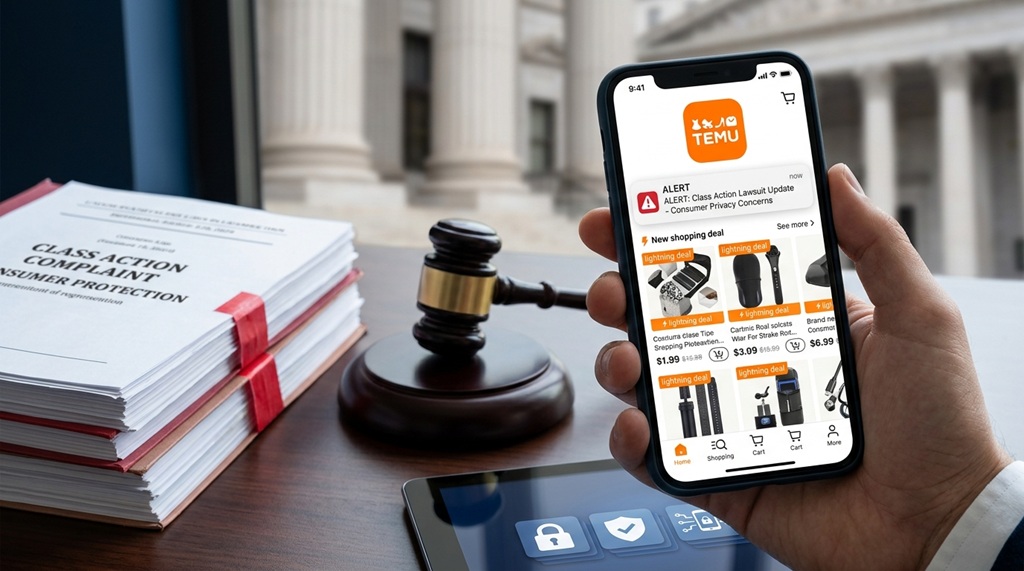
Temu Lawsuit 2026 Update: Privacy Claims, Fake Discounts, Text Messages, and Potential Consumer Compensation
Millions of Americans use Temu to purchase low-cost products online. The platform has become one of the largest e-commerce marketplaces in the United States. At the same time, Temu has faced multiple lawsuits involving privacy concerns, alleged fake discounts, marketing text messages, marketplace transparency, and consumer protection issues.
Many consumers now want to know whether Temu is being sued, whether a settlement exists, and whether they may qualify for compensation in the future. This guide explains the major Temu lawsuits, regulatory investigations, settlement status, eligibility questions, and what consumers should know moving forward.
Temu Lawsuit 2026 at a Glance
| Topic | Current Status |
| Privacy Lawsuit | Active |
| Fake Discount Lawsuit | Active |
| TCPA Text Message Lawsuit | Active |
| FTC Action | Regulatory Action |
| Settlement Approved? | No |
| Payout Available? | No Confirmed Payout |
| Arbitration Issue | Ongoing |
Why Are People Searching for the Temu Lawsuit?
Interest in the Temu lawsuit increased after several class actions, state investigations, and regulatory actions were filed against the company.
Consumers commonly search for:
- Why is Temu being sued?
- Is the Temu lawsuit real?
- Can I receive compensation?
- Is Temu collecting user data?
- Has Temu reached a settlement?
- Is Temu safe to use?
The answer depends on the specific lawsuit because Temu currently faces multiple legal disputes rather than one single case.
Who Owns Temu?
Temu is operated by PDD Holdings, a global e-commerce company that owns and manages several online retail platforms. The company expanded aggressively into the U.S. market after launching Temu and quickly became one of the most downloaded shopping apps in the country.
Temu’s ownership has drawn scrutiny in lawsuits and regulatory investigations, as plaintiffs and government officials have raised questions about how the platform is managed, how consumer information is handled, and how third-party sellers are monitored. Some legal complaints also examine whether corporate relationships within the broader PDD Holdings ecosystem played a role in the challenged practices.
It is important to note that ownership alone does not prove wrongdoing. Large technology and e-commerce companies are often scrutinized because of their size, market reach, and access to consumer data. Courts ultimately focus on the specific conduct alleged in a lawsuit rather than the identity of a company’s parent organization.
As Temu’s legal challenges continue, references to PDD Holdings are likely to appear throughout court filings, regulatory actions, and consumer protection investigations. However, the central questions in these cases remain focused on Temu’s business practices rather than its ownership structure alone.
What Is the Temu Lawsuit About?
The term “Temu lawsuit” does not refer to one single legal case. Instead, it describes several lawsuits and regulatory actions that have been filed against Temu and related entities in recent years. The allegations vary from case to case, but most focus on consumer privacy, data collection practices, marketing methods, and marketplace transparency.
Some plaintiffs claim that Temu collected more user information than consumers reasonably expected through its mobile application. Other lawsuits focus on allegations that advertised discounts did not accurately reflect genuine savings. Additional litigation involves promotional text messages and whether proper consumer consent was obtained before marketing communications were sent.
State regulators have also raised concerns about marketplace operations, seller verification procedures, and consumer protection issues. Temu denies wrongdoing and continues to contest the allegations. Because the lawsuits involve different legal claims and different plaintiffs, each case may follow a separate path through the courts.
Temu Lawsuit Timeline
- 2022
Temu launched aggressively in the United States and quickly gained millions of users.
- 2023
Privacy concerns began attracting attention from consumers and technology analysts.
- 2024
Multiple lawsuits alleged privacy violations and misleading pricing practices.
- 2025
Additional litigation focused on promotional text messages. Several state attorneys general also launched investigations and lawsuits.
- 2026
Multiple lawsuits remain active. Some claims have moved into arbitration proceedings while others continue in court.
Temu Data Privacy Lawsuit
One of the most widely discussed legal disputes involving Temu centers on consumer privacy and data collection practices. Several plaintiffs have alleged that the company’s mobile application gathered extensive personal information from users and collected more data than was necessary to operate a standard online shopping platform.
According to court filings, the allegations involve information such as device identifiers, location data, browsing activity, account details, and other forms of user information that may have been accessed through the application. Plaintiffs argue that consumers were not fully informed about the scope of the alleged collection practices or how certain information may have been used.
Privacy concerns surrounding mobile applications are not unique to Temu. Similar lawsuits have been filed against social media platforms, technology companies, and e-commerce businesses that collect large amounts of consumer data. In many of these cases, courts must determine whether users received adequate disclosures and whether the company’s practices complied with applicable privacy laws.
Temu has denied the allegations and maintains that its data practices are disclosed through its privacy policies and user agreements. The company argues that consumers consent to certain forms of information collection when using the platform.
What Are Consumers Alleging About Temu’s Privacy Practices?
Plaintiffs claim Temu’s mobile application collected extensive user information beyond what was necessary for ordinary shopping functions.
Common allegations include:
- Excessive app permissions
- Broad data collection practices
- Behavioral tracking
- Device monitoring
- Data sharing concerns
These allegations remain contested and have not been proven in court.
Why Did Some Temu Privacy Claims Move to Arbitration?
A significant development in the Temu litigation occurred when a federal court examined whether certain users could pursue their claims through a traditional class action lawsuit. The issue centered on Temu’s Terms of Service and the arbitration provisions that users may have accepted when creating an account or using the platform.
Arbitration is a private dispute resolution process that operates outside the public court system. Many technology companies, online marketplaces, and mobile applications include arbitration clauses in their user agreements. These provisions often require disputes to be resolved individually rather than through a class action lawsuit.
In Temu’s case, the court did not decide whether the company violated any privacy laws. Instead, the ruling focused on where the dispute should be resolved. The court concluded that certain claims may need to proceed through arbitration because users agreed to those terms when accessing the platform.
The decision is important because arbitration can change how consumers pursue legal claims. Individuals may have different procedural rights than they would in a class action lawsuit, and the overall litigation process may follow a different timeline. Arbitration can also affect issues such as discovery, appeals, and participation in larger consumer actions.
For consumers searching for potential settlements, the arbitration issue is one of the most important aspects of the Temu litigation. If claims are resolved through individual arbitration rather than a class action, the path to compensation may differ significantly from a traditional class action settlement.
Although some privacy claims have moved toward arbitration, other Temu-related lawsuits continue through federal and state courts. As a result, the legal landscape remains complex, and different cases may produce different outcomes depending on the claims involved and the courts overseeing them.
Temu Fake Discount Lawsuit
Short Answer
Plaintiffs allege that Temu displayed misleading reference prices that exaggerated advertised discounts.
According to the lawsuit, consumers may have been shown large percentage discounts based on allegedly inflated original prices.
Allegations include:
- Inflated reference prices
- Artificial markdowns
- Misleading comparison pricing
- False urgency tactics
Temu disputes these allegations. Lawsuits involving pricing and marketing claims are not limited to online marketplaces. Similar consumer protection allegations have also appeared in the Texas Roadhouse Menu Class Action Lawsuit, which focuses on whether certain product descriptions and representations may have misled consumers.
How Do False Markdown Lawsuits Work?
Courts typically examine:
- Historical pricing records
- Product listings
- Internal pricing data
- Marketing materials
- Consumer purchasing behavior
The primary legal question is whether a reasonable consumer could have been misled.
Temu Text Message Lawsuit
Short Answer
The text message lawsuit alleges that Temu violated the Telephone Consumer Protection Act (TCPA). Plaintiffs claim promotional text messages were sent without sufficient consent. The lawsuit also alleges that some recipients were listed on the National Do Not Call Registry. If violations are proven, federal law may allow statutory damages. Temu denies liability.
The allegations against Temu focus on whether consumers provided sufficient consent before receiving promotional messages. Similar issues have appeared in other consumer litigation, including the Cash App Text Message Lawsuit Settlement, where plaintiffs challenged referral and marketing text messages allegedly sent without proper authorization.
State Attorney General Lawsuits Against Temu
Several state attorneys general have filed lawsuits or launched investigations into Temu’s practices.
Government actions often focus on:
- Consumer protection laws
- Marketplace transparency
- Data collection practices
- Product authenticity concerns
- Seller verification systems
Nebraska’s Lawsuit Against Temu
In 2025, Nebraska Attorney General Mike Hilgers filed a lawsuit against Temu and related entities, alleging that the company engaged in practices that violated the state’s consumer protection laws. The lawsuit became one of the most closely watched government actions involving the platform because it expanded beyond private consumer complaints and brought regulatory scrutiny into the spotlight.
According to the complaint, Nebraska officials raised concerns about how consumer information was allegedly collected and handled through the Temu platform. The lawsuit also questions certain aspects of marketplace transparency, including how products and sellers are presented to consumers. State officials further alleged that some listings may have created risks involving counterfeit goods and inaccurate seller information.
The Nebraska Attorney General argues that these practices could mislead consumers and undermine confidence in online marketplace transactions. The lawsuit seeks legal remedies that could include changes to business practices, court orders, and other forms of relief available under state law.
Temu disputes the allegations and has denied engaging in unlawful conduct. As with other litigation involving the company, the claims remain allegations until they are evaluated through the legal process. The case continues to be monitored because its outcome could influence how online marketplaces address seller verification, consumer disclosures, and marketplace oversight in the future.
Arizona’s Consumer Protection Lawsuit
Arizona officials allege violations involving:
- Consumer deception
- Product authenticity concerns
- Data privacy issues
- Marketplace transparency
The litigation remains ongoing.
FTC Action Against Temu
Short Answer
Federal regulators have also scrutinized Temu’s marketplace operations. The FTC alleged potential noncompliance with portions of the INFORM Consumers Act.
The law requires marketplaces to:
- Verify certain high-volume sellers
- Improve marketplace transparency
- Provide consumer disclosures
- Reduce fraud risks
The matter remains part of ongoing regulatory proceedings.
Regulatory Scrutiny Beyond Lawsuits
Temu’s legal challenges extend beyond private lawsuits.
Regulators continue reviewing:
- Consumer privacy practices
- Marketplace seller verification
- Counterfeit prevention systems
- Consumer disclosures
- Data security controls
Government investigations can sometimes lead to operational changes even when consumer lawsuits remain unresolved.
What Does Temu Say About the Allegations?
Temu has generally denied wrongdoing in the lawsuits and investigations filed against it.
The company disputes allegations involving:
- Data collection practices
- Pricing representations
- Marketing communications
- Marketplace operations
Most claims remain unresolved.
Is There a Temu Lawsuit Settlement in 2026?
Short Answer
No nationwide Temu settlement has been approved as of 2026. Several lawsuits remain active.
Consumers should be cautious about websites that advertise specific payout amounts because many published estimates are speculative.
How Much Could a Temu Lawsuit Payout Be?
No approved payout currently exists.
Potential compensation could depend on:
- Lawsuit type
- Class size
- Settlement amount
- Proven damages
- Attorney fees
- Administrative costs
| Lawsuit Type | Potential Compensation Factors |
| Privacy Claims | Data exposure and class size |
| False Advertising | Purchase history and losses |
| TCPA Claims | Number of communications |
| State Actions | Court-approved remedies |
Can You Join the Temu Lawsuit?
Eligibility depends on the specific case.
Potential claimants may include:
- Temu app users
- Temu purchasers
- Text message recipients
- Residents of specific states
Consumers should monitor official court notices and settlement websites for updates.
How to Check If You Qualify for a Future Settlement
You may want to keep:
- Purchase receipts
- Order confirmations
- Email records
- Text messages
- Account information
These documents may become useful if future settlements require proof of eligibility.
What Should Temu Users Do Right Now?
Consumers who are following the ongoing litigation should consider keeping records of their Temu activity. Order confirmations, receipts, invoices, and promotional communications may become useful if future settlements require proof of purchases or account activity. Users may also want to review the permissions granted to the Temu mobile application. Location access, camera permissions, contact access, and background activity settings can often be adjusted directly through a device’s privacy controls.
It is also important to follow updates from official court records and settlement administrators rather than relying on social media posts or unofficial payout estimates. High-profile lawsuits often attract scams that promise compensation before any settlement has actually been approved. At this stage, the most practical approach is to stay informed, preserve relevant records, and monitor verified legal developments as the cases continue to move forward.
Sources and Legal References
This article is based on publicly reported court filings, regulatory actions, attorney general complaints, federal litigation records, and consumer protection reports. Readers should review official court records for the most current developments.
FAQs
How to get money from the Temu lawsuit?
You may receive compensation only if a Temu lawsuit results in a court-approved settlement or judgment. You would need to meet the eligibility requirements and submit a valid claim if required.
How much is the Temu lawsuit payout per person?
There is currently no confirmed Temu lawsuit payout. Any future payment would depend on the settlement amount, the number of claimants, and court approval.
Is Temu being sued in Canada?
Most public lawsuits against Temu have been filed in the United States. Consumers should check Canadian court records or official legal notices for any active Canadian cases.
Who is eligible for Google’s $700 million settlement payout?
The Google $700 million settlement is unrelated to Temu. Eligibility generally applies to certain Google Play users covered by the settlement terms.
Is there a class action lawsuit against Temu?
Yes. Temu has faced class action lawsuits involving alleged privacy violations, misleading discounts, and marketing text messages.
Am I eligible for a class action lawsuit?
Eligibility depends on the specific case. Factors may include your location, Temu account activity, purchases, or whether you received promotional communications.
Can I get money from the Temu lawsuit?
Compensation would depend on the outcome of a specific lawsuit, settlement approval, and eligibility requirements. No universal payout currently exists.
Why is Temu being sued?
Temu faces lawsuits involving alleged privacy violations, misleading discounts, promotional text messages, and consumer protection concerns. The company denies wrongdoing.
Is there a Temu lawsuit settlement in 2026?
No widely approved nationwide class action settlement has been announced as of 2026. Several cases remain active.
Final Thoughts
The Temu lawsuit landscape involves multiple legal disputes rather than a single case. Current litigation includes privacy claims, false advertising allegations, TCPA text message lawsuits, attorney general actions, and regulatory investigations.
Most allegations remain unresolved. Courts and arbitrators continue reviewing evidence and legal arguments. Consumers should stay informed, preserve records, and rely on official court filings rather than speculative payout claims.

Sadia Parveen is a content writer at ClassAction24.com who creates informational articles on class action lawsuits, consumer protection matters, and legal developments. Her work focuses on researching public court records, official filings, and reputable news sources, then presenting it in a clear and neutral format for general readers. Her articles follow the ClassAction24.com editorial policy and are reviewed by an editor before publication. She does not provide legal advice or professional legal services.