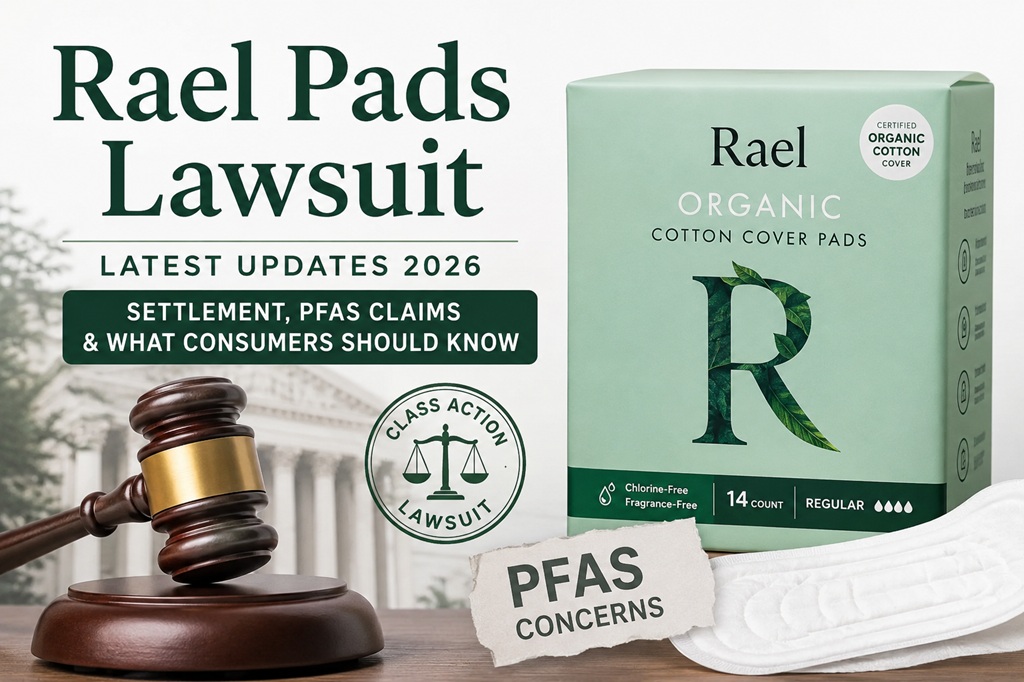
Rael Pads Lawsuit 2026: Confirmed Lawsuits, PFAS Claims, Settlement Status, and Who May Qualify
Several lawsuits involving Rael Inc. have led consumers to search for information about the company’s feminine hygiene products, including pads, liners, and wipes. However, many online discussions combine separate legal issues, making it difficult to distinguish confirmed court proceedings from speculation.
As of July 2026, there is no nationwide Rael settlement, no court-approved claims process, and no judicial finding that Rael pads contain harmful PFAS. This article explains the confirmed lawsuits involving Rael, clarifies how PFAS concerns relate to broader industry discussions, and outlines what consumers should know based on publicly available court records and official sources.
The Short Answer
The term “Rael Pads Lawsuit” to describe several separate legal disputes involving Rael Inc. and its feminine hygiene products. These cases involve different allegations, so you shouldn’t treat them as a single nationwide class action.
As of July 2026:
- No nationwide settlement has been approved.
- There is no official claims website or claim form for Rael pad purchasers.
- No court has ruled that Rael pads contain harmful PFAS.
- The confirmed lawsuits primarily involve allegations about “natural” and “organic” product labeling, rather than confirmed PFAS contamination.
- Two publicly documented legal proceedings involving Rael remain active, and neither has resulted in a court-approved settlement or consumer compensation program.
If you encounter a website claiming that a Rael PFAS settlement is currently accepting claims, verify the information through official court records or a court-approved settlement administrator before submitting personal information.
What Is the Rael Pads Lawsuit About?
The phrase “Rael Pads Lawsuit” does not refer to a single court case. Instead, it is commonly used to describe several legal disputes involving Rael Inc.’s marketing of feminine hygiene products, including pads, liners, period underwear, and feminine wipes.
One reason for the confusion is that online discussions often combine two separate issues:
- Confirmed lawsuits challenging Rael’s “natural” and “organic” marketing claims, and
- Broader public concerns about PFAS (“forever chemicals”) in menstrual and personal care products.
These are not the same issue.
The confirmed lawsuits currently focus on allegations that certain Rael products were marketed in ways that allegedly misled consumers regarding their ingredients or organic content. The plaintiffs argue that consumers paid premium prices based on those representations, while Rael denies wrongdoing.
As of July 2026, no court has determined that Rael pads contain harmful PFAS, and the confirmed legal proceedings are not based on a judicial finding of PFAS contamination.
Rael has not been found liable in either confirmed case, and neither lawsuit has resulted in a court-approved settlement.
Confirmed Lawsuits Involving Rael Inc.
1. Blansette v. Rael, Inc. — Natural Feminine Wipes
Case No. 3:23-cv-00006-DMR, U.S. District Court, Northern District of California, filed January 3, 2023.
Plaintiff Sarah Blansette alleges that Rael marketed its Natural Feminine Wipes as “natural” even though they contained several synthetic ingredients, including phenoxyethanol, polysorbate 20, sodium benzoate, citric acid, caprylyl glycol, ethylhexylglycerin, 1,2-hexanediol, and butylene glycol. According to the complaint, consumers paid a premium price believing the products were made with natural ingredients. The lawsuit seeks to represent consumers in twelve states who purchased the wipes.
Importantly, this lawsuit does not allege that Rael products contain PFAS or other “forever chemicals.” Instead, it focuses solely on whether the company’s “natural” marketing claims were misleading under consumer protection laws.
2. Environmental Democracy Project v. Rael, Inc. — Organic Labeling
California Court of Appeal, First Appellate District, Division Two (opinion issued December 2025).
The trial court initially ruled that California’s Organic Food and Farming Act (COFFA) did not apply to personal hygiene products and dismissed the claims against Rael. In December 2025, the California Court of Appeal reversed that decision, holding that COFFA can apply to feminine hygiene products marketed as organic. The appellate court sent the case back to the trial court for further proceedings.
The Court of Appeal did not decide whether Rael violated the law. Instead, it ruled that the plaintiffs’ claims should be considered under the correct legal standard. Whether Rael’s marketing violated California law will be decided as the case continues.
Although both lawsuits involve Rael’s product marketing, they concern different products and different legal claims. Neither case has resulted in a nationwide settlement or a court finding that Rael pads contain harmful PFAS.
Key Difference Between the Two Confirmed Cases
| Case | Main Allegation |
| Blansette v. Rael | “Natural” marketing allegedly conflicted with the product’s ingredient list. |
| Environmental Democracy Project v. Rael | “Organic cotton” marketing allegedly did not satisfy California organic labeling requirements. |
Neither a confirmed case alleges nor establishes that Rael pads contain harmful PFAS.
Case Progress So Far (Confirmed Dates Only)
The timeline below includes only confirmed procedural developments based on publicly available court filings and judicial opinions. It does not include estimated settlement dates or unverified reports.
| Date | Event |
| Jan 3, 2023 | Blansette v. Rael, Inc. filed in U.S. District Court, N.D. California (Case No. 3:23-cv-00006-DMR) |
| Dec 2025 | California Court of Appeal reverses trial court in Environmental Democracy Project v. Rael, Inc., holding COFFA applies to feminine hygiene products |
| Present (July 2026) | Both cases remain in active litigation; no settlement has been reached in either case |
We update this timeline only when new court filings, judicial rulings, or other official case developments become publicly available. We do not publish estimated settlement dates or speculative case milestones.
What About PFAS?
PFAS (per- and polyfluoroalkyl substances), often called “forever chemicals,” are a large group of synthetic compounds used in many consumer and industrial products because they resist water, heat, and stains. Since these chemicals can remain in the environment for long periods, they have become the subject of increasing scientific research and consumer litigation involving products such as food packaging, cosmetics, textiles, and personal care items.
Independent laboratory testing has raised questions about PFAS in some menstrual and feminine hygiene products sold by various manufacturers. Consumers interested in broader menstrual product lawsuits may also want to read about the Honeypot Tampons Lawsuit, which discusses separate allegations involving lead contamination and explains how those claims differ from the Rael litigation.
As a result, many consumers searching for information about Rael also encounter broader discussions about PFAS, even though those discussions are separate from the confirmed lawsuits described in this article. But it’s worth being precise:
- Many laboratory reports measure total organic fluorine (TOF), which is a screening tool rather than direct proof that specific PFAS chemicals are present. Additional testing is usually required to identify individual PFAS compounds.
- Detecting fluorine alone does not prove that PFAS were intentionally added to a product. Fluorine may originate from raw materials, manufacturing processes, packaging, or other sources.
- The confirmed lawsuits involving Rael focus on “natural” and “organic” marketing claims. They do not allege or establish that Rael pads contain harmful PFAS.
- Rael has publicly stated that it does not intentionally add PFAS to its products and that it requires its suppliers to comply with the company’s material standards.
If future court filings, regulatory actions, or verified scientific findings materially change the legal or factual status of PFAS allegations involving Rael products, this article will be updated to reflect those developments.
Key Takeaway
- No court has ruled that Rael pads contain harmful PFAS.
- The confirmed lawsuits focus on marketing and labeling claims.
- There is currently no nationwide PFAS settlement involving Rael products.
Is There a Settlement? Can I File a Claim?
No. As of July 2026, no court has approved a nationwide settlement involving Rael products, and there is currently no official claims process for consumers.
That means there is currently no:
- court-approved settlement agreement
- official settlement website
- court-appointed claims administrator
- claim form
- confirmed compensation amount
Be cautious of websites that advertise estimated settlement payouts or invite consumers to submit claims. Unless a court approves a settlement and an official claims administrator is appointed, any payment estimates are speculative and should not be treated as confirmed.
What you can do now:
- Save your purchase records — Amazon order history, Target/Walmart receipts, bank or card statements showing Rael purchases. Class actions like Blansette typically don’t require a receipt to self-certify a purchase later, but records make any future claim stronger.
- Do not submit personal or financial information to websites promising Rael settlement payments. Until a court approves a settlement, there is no official claims process.
- If you experienced a health issue you believe is connected to a Rael product, that’s a separate, individualized matter from a consumer class action — talk to a healthcare provider and, separately, a personal injury attorney if you want to explore legal options.
How Will I Know if a Settlement Is Approved?
If a settlement is approved in the future, the court will authorize an official settlement website explaining who qualifies, how to file a claim, important deadlines, and any available compensation. We will update this page if that happens.
FAQs
Is the Rael pads lawsuit real?
Yes. Two confirmed lawsuits involving Rael Inc. have been filed and are discussed above. However, there is no single nationwide “Rael Pads Lawsuit” involving an approved PFAS settlement or an open claims process.
Were PFAS actually found in Rael pads?
No court has found that Rael pads contain harmful PFAS. While broader discussions about PFAS in menstrual products exist, they are separate from the confirmed lawsuits involving Rael described in this article.
Can I file a claim right now?
Not for a nationwide settlement — none has been approved. If you purchased Rael Natural Feminine Wipes, the ongoing Blansette case may eventually affect your rights, but there’s no open claims process to file a claim at this stage.
Are Rael pads safe to use?
Rael states that its pads are made with certified organic cotton and are designed for sensitive skin. While lawsuits have challenged some marketing claims, no court has determined that Rael pads are unsafe to use.
Is Rael in a lawsuit?
Yes. Rael has been named in consumer lawsuits alleging misleading “natural” and “organic” marketing of certain feminine hygiene products. The litigation is ongoing, and no nationwide settlement has been approved.
Is the Rael brand Israeli?
No. Rael is a California-based feminine care company founded in the United States. It is not an Israeli brand.
Is Rael Pads a Korean brand?
Not exactly. Rael is an American brand headquartered in California, but many of its products are manufactured using South Korean technology and expertise.
Do I need a receipt?
Not necessarily, if and when a settlement claims process opens — but keep whatever records you have (order history, bank statements) in the meantime.
Where can I verify updates myself?
You can verify case updates through official court records, including PACER for federal cases and the California Courts website for state court opinions. We also update this page when significant court filings or rulings become publicly available.
Our editorial team reviews publicly available court filings, judicial opinions, and official announcements to keep this article current. If a settlement is approved or a claims process opens, we will update this page with verified information.

Sadia Parveen is a content writer at ClassAction24.com who creates informational articles on class action lawsuits, consumer protection matters, and legal developments. Her work focuses on researching public court records, official filings, and reputable news sources, then presenting it in a clear and neutral format for general readers. Her articles follow the ClassAction24.com editorial policy and are reviewed by an editor before publication. She does not provide legal advice or professional legal services.