Native Deodorant Class Action Lawsuit: Settlement Status, 72-Hour Protection Claims, and Latest 2026 Updates
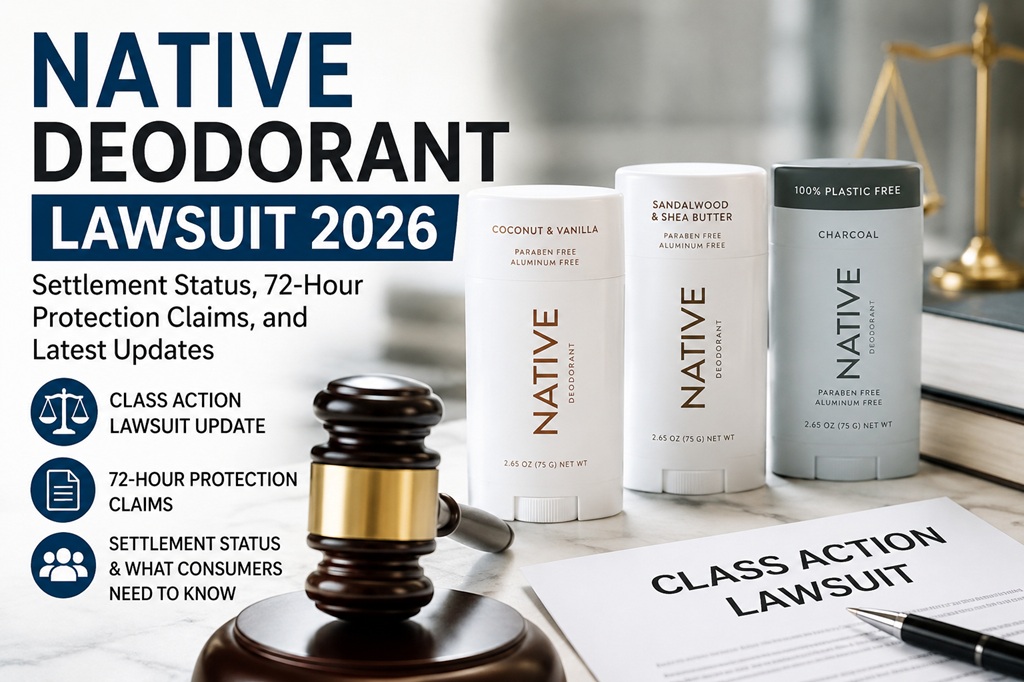
Consumers searching for the Native Deodorant class action lawsuit often want answers to three questions. Is there a settlement? Can consumers receive compensation? What happened to the lawsuit? The lawsuit attracted significant attention after consumers challenged Native’s advertising claims regarding long-lasting odor protection. Plaintiffs alleged that marketing statements, including claims related to extended protection periods, may have created expectations that were not consistently achieved under normal use conditions.
Native, a personal care brand owned by Procter & Gamble, denied wrongdoing and defended its advertising practices. The dispute ultimately focused on consumer protection laws and whether a reasonable consumer would interpret the challenged statements as the plaintiffs claimed. As of June 2026, no publicly confirmed Native deodorant class action settlement has been announced, and no active consumer claims process appears to be available.
This guide explains the allegations, court proceedings, dismissal of claims, settlement status, PFAS-related concerns, and what consumers should know moving forward.
Native Deodorant Lawsuit Status at a Glance (June 2026)
| Item | Current Status |
| Product Involved | Native Deodorant |
| Brand Owner | Procter & Gamble |
| Lawsuit Type | Consumer Class Action |
| Main Allegation | Allegedly misleading advertising claims |
| Key Marketing Claim | 72-Hour Odor Protection |
| Settlement Approved | No publicly confirmed settlement |
| Active Claim Form | None identified |
| Consumer Compensation | Not currently available |
| Court Status | Significant claims dismissed |
| Last Updated | June 2026 |
Quick Answer: What Is the Native Deodorant Lawsuit About?
The Native Deodorant class action lawsuit alleges that certain advertising statements regarding odor protection overstated the product’s real-world performance. Plaintiffs argued that consumers paid premium prices because they believed the deodorant would provide the advertised duration of protection. The case focused primarily on marketing and advertising practices rather than product safety concerns. Plaintiffs claimed that consumers may have been misled by performance-related statements appearing on packaging and promotional materials.
Native disputed the allegations and maintained that its advertising complied with applicable standards. A federal court later dismissed significant claims in the lawsuit, creating confusion among consumers who expected the litigation to result in a settlement or compensation program.
What Is the Native Deodorant Class Action Lawsuit?
The Native Deodorant class action lawsuit is a consumer protection case involving allegations that certain marketing statements may have misrepresented the effectiveness of Native deodorant products.
Class action lawsuits allow one or more consumers to pursue legal claims on behalf of a larger group of purchasers who allegedly experienced similar harm. In this case, plaintiffs sought to represent consumers who purchased Native deodorant products based on advertising claims concerning long-lasting odor protection.
The lawsuit centered on questions such as:
- Did Native’s advertising create unreasonable consumer expectations?
- Would an ordinary consumer interpret the marketing claims as a guarantee of performance?
- Did consumers pay more because of the challenged advertising statements?
- Did the advertising comply with consumer protection laws?
The case did not primarily allege that Native deodorant products were unsafe. Instead, it focused on whether consumers received the product performance they believed they were purchasing.
Who Owns Native Deodorant?
Native is a personal care brand owned by Procter & Gamble, one of the largest consumer goods companies in the world.
The brand gained popularity by marketing products that emphasized:
- Simplified ingredient lists
- Aluminum-free deodorant options
- Premium personal care products
- Direct-to-consumer sales
- Natural-inspired branding
Native’s rapid growth helped it become one of the most recognized deodorant brands in the United States. Increased visibility also brought greater scrutiny from consumers, advocacy groups, and plaintiff attorneys.
Why Was Native Deodorant Sued?
The lawsuit focused on advertising claims related to odor protection. According to the plaintiffs, Native promoted its deodorant products using statements that suggested consumers could expect extended protection against odor. Plaintiffs argued that many consumers purchased the product because they relied on those representations.
The legal theories commonly asserted in consumer product lawsuits include:
- False advertising
- Misleading marketing practices
- Consumer fraud
- Breach of express warranty
- Unfair business practices
- Violations of consumer protection statutes
Plaintiffs alleged that consumers paid premium prices because they believed Native deodorant would perform as advertised. The company denied the allegations and challenged the legal basis of the claims.
Understanding the 72-Hour Odor Protection Allegations
One of the most discussed issues in the Native deodorant litigation involved advertising statements referencing 72-hour odor protection. Plaintiffs argued that reasonable consumers could interpret these claims as a promise that the product would consistently provide odor protection for the advertised period.
According to the complaint, many consumers purchased the product expecting that level of performance. Plaintiffs claimed that some users allegedly experienced results that differed from those expectations. The dispute was not simply about whether one consumer experienced odor before 72 hours. Instead, the legal question involved how consumers interpret advertising language.
Courts evaluating false advertising claims often examine:
- Product packaging
- Marketing materials
- Website statements
- Consumer expectations
- Scientific substantiation
- Context surrounding advertising claims
The outcome depended on legal standards governing consumer interpretation rather than individual user experiences.
What Evidence Did Plaintiffs Present?
In advertising-related class action lawsuits, plaintiffs typically attempt to show that marketing statements influenced purchasing decisions and caused consumers to pay more for a product than they otherwise would have.
According to the allegations, plaintiffs relied on several forms of evidence, including:
- Product packaging and labeling
- Advertising materials
- Website marketing claims
- Consumer experiences and complaints
- Representations regarding odor protection duration
Plaintiffs argued that consumers interpreted the advertising as a promise of consistent performance and purchased Native deodorant because of those representations. Consumer product lawsuits frequently focus on whether marketing claims would likely influence a reasonable purchaser’s buying decision. The case, therefore, centered on advertising language and consumer expectations rather than laboratory testing alone.
What Was Native’s Position?
Native and its parent company, Procter & Gamble, disputed the allegations.
Like many defendants in consumer class action litigation, the company argued that:
- Advertising claims were lawful.
- Consumers were not misled.
- Plaintiffs failed to establish damages.
- Marketing statements should be evaluated in context.
- The challenged language did not guarantee identical results for every user.
Companies defending advertising lawsuits often argue that product performance varies among individuals and that marketing statements should be interpreted reasonably rather than literally. Native maintained that the allegations did not establish a valid basis for consumer fraud or false advertising claims.
What Did the Court Decide?
The court examined whether a reasonable consumer would likely interpret the challenged advertising claims in the manner alleged by the plaintiffs. Advertising cases frequently turn on this question. Rather than deciding whether every consumer achieved the advertised level of odor protection, courts often focus on how an ordinary purchaser would understand the marketing language.
After reviewing the allegations, the court dismissed significant claims asserted against Native. The ruling represented an important legal victory for the company. The court’s decision focused on whether the complaint satisfied the legal standards necessary for the case to proceed.
Consumers should understand that a dismissal does not necessarily establish that every consumer had the same experience with the product. Instead, the ruling addressed the legal sufficiency of the allegations presented to the court.
Was the Native Deodorant Lawsuit Dismissed?
Yes. Significant claims in the Native deodorant advertising litigation were dismissed by a federal court. Many consumers mistakenly assume that the filing of a lawsuit automatically leads to a settlement or compensation program. That is not how class action litigation works.
Before a case reaches trial or settlement negotiations, courts often evaluate whether the allegations satisfy applicable legal requirements. If plaintiffs fail to meet those standards, courts may dismiss all or part of a case. The dismissal of key claims substantially affected the trajectory of the Native deodorant litigation.
Is There a Native Deodorant Settlement in 2026?
No publicly confirmed settlement related to the Native deodorant advertising lawsuit has been announced as of June 2026. This remains one of the most searched questions regarding the litigation.
Many consumers search online for:
- Native deodorant settlement
- Native deodorant class action payout
- Native lawsuit claim form
- Native settlement amount
- Native deodorant compensation
Current public information does not indicate the existence of:
- An approved settlement fund
- A court-approved settlement agreement
- A settlement administrator
- A consumer claims portal
- A deadline for filing claims
Consumers should be cautious when encountering unofficial websites that claim settlement payments are available without supporting court documentation.
Can Consumers File a Claim?
At present, no active claims process appears to be available for the advertising-related Native deodorant litigation.
Consumers typically become eligible to submit claims only after:
- A settlement receives preliminary approval.
- Notice is issued to class members.
- A settlement administrator opens a claims process.
- The court grants final approval.
Because no publicly confirmed settlement has been announced, consumers currently do not appear to have access to a settlement claim form related to the advertising allegations.
How Much Could Consumers Receive If a Settlement Occurs?
No settlement amount has been announced. As a result, there is currently no verified estimate regarding potential compensation.
In consumer product class actions, settlement benefits may vary significantly depending on:
- Number of class members
- Product purchases
- Proof of purchase requirements
- Settlement fund size
- Attorney fee awards
- Court approval
Potential benefits in similar cases sometimes include:
- Cash payments
- Partial refunds
- Product vouchers
- Reimbursement programs
- Changes to advertising practices
Because the Native litigation has not produced a publicly confirmed settlement, any estimate regarding compensation would be speculative.
Native Deodorant Lawsuit Timeline
Native Brand Expansion
Native became one of the fastest-growing personal care brands in the United States and developed a strong reputation among consumers seeking alternative deodorant products.
Consumer Concerns Emerge
Some consumers questioned whether the advertised duration of odor protection matched their real-world experiences.
Class Action Lawsuit Filed
Plaintiffs initiated litigation alleging that advertising claims may have misled purchasers.
Federal Court Review
The court evaluated the allegations under consumer protection and advertising law standards.
Claims Dismissed
The court dismissed significant claims after determining that the allegations did not satisfy the required legal standards.
Current Status
No publicly confirmed settlement or active compensation program has been announced.
Native Deodorant PFAS Investigation Explained
Some consumers confuse the deodorant advertising lawsuit with separate PFAS-related concerns involving certain Native products. These matters involve different allegations and legal theories. PFAS, commonly called “forever chemicals,” are synthetic substances that have attracted increasing attention from regulators, scientists, and consumer advocates.
Researchers have examined PFAS because of their persistence in the environment and potential health concerns associated with long-term exposure. Certain investigations involving personal care products have explored whether PFAS compounds may be present in product formulations or packaging.
Are PFAS Allegations Connected to the Native Deodorant Lawsuit?
No. The deodorant advertising litigation and PFAS-related investigations are separate matters. The deodorant lawsuit focused primarily on advertising and performance claims. PFAS investigations involve different products, different factual allegations, and different legal questions.
Consumers should avoid assuming that allegations concerning PFAS automatically relate to the advertising claims discussed in the deodorant class action lawsuit.
Is Native Deodorant Safe?
The advertising lawsuit did not primarily allege that Native deodorant products were unsafe. Instead, the litigation focused on marketing statements regarding product performance.
Consumers evaluating any deodorant product should consider:
- Personal ingredient preferences
- Skin sensitivity
- Allergic reactions
- Fragrance tolerance
- Individual effectiveness needs
Product performance may vary based on:
- Body chemistry
- Activity level
- Climate
- Frequency of application
- Skin type
No court ruling in the advertising litigation concluded that Native deodorant presents a general safety risk to consumers.
Why Has Native Deodorant Become Controversial?
Several factors have contributed to public discussion surrounding Native products.
These include:
- Advertising-related litigation
- PFAS-related investigations involving certain products
- Consumer debates regarding product effectiveness
- Social media discussions
- Marketing campaigns that attracted public attention
Each issue involves different allegations and should be evaluated separately. The existence of one controversy does not automatically validate unrelated claims about product safety or performance.
What Should Consumers Do Now?
Consumers interested in monitoring legal developments should rely on trustworthy sources of information.
Recommended sources include:
- Federal court records
- Official settlement websites
- Regulatory agency announcements
- Consumer protection organizations
- Reputable legal news publications
Consumers should verify any settlement-related claims before submitting personal information or financial data online. Future developments could change the status of the litigation, making it important to monitor reliable sources for updates.
Native Deodorant Class Action Lawsuit: Key Takeaways
Before reviewing the most common consumer questions, here are the most important facts about the litigation:
- The lawsuit primarily challenged advertising claims related to odor protection.
- Plaintiffs alleged that certain marketing statements may have created misleading expectations.
- Native and Procter & Gamble denied wrongdoing.
- A federal court dismissed significant claims in the case.
- No publicly confirmed settlement has been announced.
- No active claim form or compensation process appears available.
- The litigation is separate from PFAS-related investigations involving certain Native products.
- Consumers should rely on court records and official sources for future updates.
FAQs
Does Native deodorant support LGBTQ?
Yes. Native has participated in Pride campaigns and released limited-edition Pride-themed products in support of LGBTQ+ communities.
Is Native deodorant safe?
Native deodorant remains widely available in the U.S. The lawsuit focused on advertising claims, not product safety. Individual experiences may vary based on skin sensitivity and ingredients.
What shampoos are involved in Native-related lawsuit discussions?
Some legal investigations have referenced certain Native shampoos and conditioners, but the products involved vary by case and allegation.
Why is Native deodorant controversial?
Native has faced scrutiny over advertising claims, PFAS-related investigations involving some products, and certain marketing campaigns. These issues are separate and involve different allegations.
Is there a Native Deodorant class action settlement in 2026?
No. As of June 2026, no publicly confirmed settlement related to the Native deodorant advertising lawsuit has been announced.
Was the Native deodorant lawsuit dismissed?
A federal court dismissed significant claims in the advertising-related litigation. The ruling represented an important legal victory for Native.
How much is the Native deodorant settlement worth?
No settlement amount has been announced because no publicly confirmed settlement currently exists.
Who owns Native deodorant?
Native is owned by Procter & Gamble, one of the largest consumer goods companies in the world.
Did the lawsuit involve product safety allegations?
No. The primary focus of the litigation involved marketing and advertising claims rather than product safety concerns.
What is the 72-hour protection controversy?
Plaintiffs challenged advertising statements regarding 72-hour odor protection and argued that consumers may have interpreted those claims differently than intended.
Are PFAS investigations connected to the deodorant lawsuit?
No. PFAS-related investigations involve separate allegations and legal issues from the deodorant advertising litigation.
Why do some consumers search for a Native payout?
Many people assume that every class action lawsuit results in compensation. However, lawsuits may also end through dismissal, summary judgment, trial, or appeal.
Could a future settlement still occur?
Future legal developments can always affect litigation. Consumers should monitor official court records and reputable legal news sources for updates.
What consumer rights apply in advertising lawsuits?
Federal and state consumer protection laws generally prohibit deceptive advertising, material misrepresentations, and unfair business practices that may influence purchasing decisions.
What remedies are available in successful class actions?
Potential remedies can include:
- Cash compensation
- Product reimbursement
- Refunds
- Injunctive relief
- Changes to advertising practices
- Attorney fees and costs
The availability of these remedies depends on the outcome of a specific case.
How can consumers verify settlement information?
Consumers should verify settlement announcements through:
- Official court records
- Court-approved settlement websites
- Settlement administrators
- Government agencies
- Reputable legal publications
Consumer Rights in False Advertising Lawsuits
Consumer protection laws exist to help ensure that advertising accurately reflects the characteristics, performance, and benefits of products sold in the marketplace.
When evaluating advertising-related lawsuits, courts may examine whether:
- Marketing statements were misleading.
- Consumers relied on those statements.
- Material information was omitted.
- Purchasers suffered measurable economic harm.
- Advertising claims could influence buying decisions.
Successful consumer lawsuits can sometimes result in refunds, compensation, product labeling changes, or modifications to advertising practices. However, plaintiffs must satisfy legal standards before a court will allow those claims to proceed.
Similar consumer protection issues have appeared in other lawsuits involving online marketplaces and advertising practices, including ongoing litigation discussed in our Temu lawsuit update.
Why This Lawsuit Matters
The Native deodorant litigation reflects a broader trend affecting consumer brands across multiple industries.
Modern consumers increasingly scrutinize:
- Product labeling
- Advertising claims
- Scientific substantiation
- Ingredient disclosures
- Marketing transparency
As companies compete for consumer attention, courts continue to play an important role in determining whether advertising claims comply with consumer protection laws. The case also highlights the growing importance of clear communication between brands and consumers regarding product performance expectations. The Native lawsuit reflects a broader trend of consumer product lawsuits involving marketing claims and product labeling litigation.
Sources and Legal References
Consumers seeking the latest updates should consult reliable sources, including:
- Federal court records
- Official court filings
- Court-approved settlement websites
- Regulatory agency announcements
- Consumer protection agencies
- Reputable legal news publications
Information regarding class action lawsuits can change as new filings, appeals, or rulings occur. Readers should verify developments through official sources whenever possible.
Final Thought
The Native Deodorant class action lawsuit generated substantial public interest because it involved advertising claims made by one of the most recognizable personal care brands in the United States. Plaintiffs alleged that certain marketing statements regarding odor protection may have misled consumers. Native and Procter & Gamble disputed those allegations and defended the challenged advertising practices.
A federal court ultimately dismissed significant claims, and no publicly confirmed settlement has been announced as of June 2026. For consumers searching for a Native deodorant payout, claim form, or compensation program, current public information does not indicate that such a program exists. The case serves as a reminder that allegations, court rulings, and settlements are distinct stages of litigation. While lawsuits often attract significant attention, they do not automatically result in compensation or findings of wrongdoing.
Consumers interested in future developments should continue monitoring official court records and trusted legal news sources for the most accurate and up-to-date information.

Sadia Parveen is a content writer at ClassAction24.com who creates informational articles on class action lawsuits, consumer protection matters, and legal developments. Her work focuses on researching publicly available information and presenting it in a clear and neutral format for general readers. She does not provide legal advice or professional legal services.