Quaker Oats Settlement: The Complete Story Behind the $6.75 Million Lawsuit, the Recall, and What Consumers Actually Got
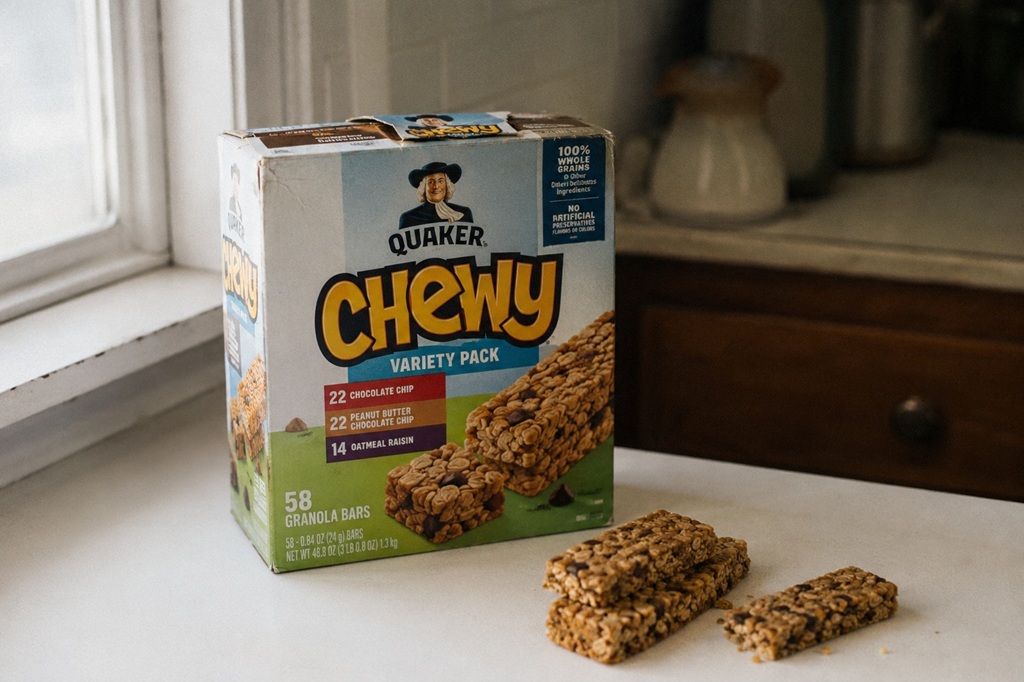
Picture a Tuesday morning in December 2023. A parent opens the pantry, grabs a box of Quaker Chewy Granola Bars — a brand they have trusted since childhood — and hands one to their kid before school. Nothing about that moment felt unusual. Millions of American households did the same thing that week. Then the FDA announcement dropped.
Quaker was voluntarily recalling dozens of its most popular granola and cereal products due to possible salmonella contamination. Within weeks, the recall expanded to over 90 product formulations. Within months, a federal lawsuit was filed. And by June 2025, a $6.75 million class action settlement was in place — one of the larger food recall settlements in recent memory.
This article covers the full story of the Quaker Oats settlement — not just the deadline and the claim form, but what actually caused it, who got paid, how much they received, and what it exposed about the gaps in American food safety accountability.
If you bought any Quaker products between 2023 and early 2025, this case almost certainly involved you — whether you knew it or not.
Quick Facts
- Settlement fund: $6.75 million
- Claim deadline: June 27, 2025 — now closed
- Final court approval: August 7, 2025
- Case: Kessler et al. v. The Quaker Oats Company, S.D.N.Y. No. 7:24-cv-00526-KMK
- Claims administrator: FoodRecallSettlement.com | 877-688-4026
- Who was eligible: U.S. consumers who purchased any covered recalled Quaker product for personal or household use before March 13, 2025
- Payout range: Approximately $5–$25 without proof of purchase; higher with documented receipts
Important Disambiguation — Two Separate Lawsuits
Several articles online conflate two entirely different legal actions against Quaker Oats. Here is the distinction clearly stated:
- The $6.75 million settlement (Kessler v. Quaker Oats, S.D.N.Y.) resolved Salmonella contamination claims. This is the settled case.
- The glyphosate “natural” label lawsuit (Fitzgerald v. Quaker Oats, N.D. Ill.) — alleged pesticide residue and deceptive labeling. Dismissed March 18, 2025.
- The chlormequat concern is a separate regulatory and scientific issue, not yet resulting in any finalized settlement as of mid-2026.
The $6.75 million settlement covers Salmonella only. Full details on all three tracks appear in Section 7 below.
What Happened at the Danville, Illinois Plant — How the Salmonella Contamination Occurred
Most coverage of the Quaker Oats settlement stops at “Salmonella was found in products.” That sentence tells you almost nothing about how a contamination of this scale actually happens — or how long it may have been building before anyone caught it.
A Facility With Decades of History
The facility at the center of this case was Quaker’s manufacturing plant in Danville, Illinois. The plant had operated for decades, producing some of the company’s highest-volume snack and cereal lines. It employed hundreds of workers and supplied products to retailers across the entire country.
How Salmonella Takes Hold in a Food Plant
Salmonella contamination in a food manufacturing environment does not typically appear overnight. Food safety experts describe it as a persistent problem. The bacteria can establish themselves in drains, on equipment surfaces, in hard-to-clean corners of a production line, and in moisture-prone areas that are difficult to fully sterilize between production runs. Once it takes hold in a facility, it can cycle through products repeatedly before environmental testing detects it.
What the FDA Found
The FDA’s subsequent inspection of the Danville facility identified conditions consistent with what regulators call a “harborage” — an environment where bacteria can survive and re-contaminate products even after routine cleaning. This is not a cleaning failure in the sense of a single bad day. It reflects a systemic gap in the facility’s environmental monitoring program. The FDA’s inspection findings are documented in its public warning letter database at FDA.gov.
Why the Timeline Mattered Legally
What makes the Danville situation particularly significant is the timeline. The products recalled in December 2023 had been manufactured and distributed over a period of months. That means consumers were potentially purchasing and eating affected products well before Quaker or the FDA identified the contamination risk. The lawsuit would later argue that Quaker should have caught this sooner — and that the company’s failure to detect and disclose the risk in time constituted a violation of consumer protection law.
The Plant Never Reopened
In early 2024, PepsiCo — Quaker’s parent company — announced that the Danville facility would be permanently closed. It never reopened. Hundreds of workers lost their jobs. The plant that had been making Quaker snacks for decades was shut down as a direct consequence of what began as a food safety inspection. That detail rarely appears in articles about the Quaker Oats settlement. It should, because it tells you something important about how seriously the contamination was ultimately treated.
The Recall Timeline — December 2023 to January 2024
Understanding the scope of the Quaker Oats recall is important for two reasons. First, it explains why the class action lawsuit attracted so many plaintiffs. Second, it clarifies which products were actually covered by the settlement — a question that confused many consumers.
December 15, 2023 — The First Recall
The U.S. Food and Drug Administration announced Quaker’s voluntary recall of certain granola bars and cereal products due to potential Salmonella contamination. The initial announcement covered a significant but still limited list of products, primarily from the Quaker Chewy and Simply Granola lines. The original recall notice is archived at FDA.gov under recall number F-0008-2024.
Grocery stores began pulling products from shelves. The Quaker website posted updated information. The FDA published the recalled items by UPC code.
January 11, 2024 — The Recall Expands
Less than a month later, Quaker issued a revised recall notice adding substantially more products. The expansion brought the total number of recalled product formulations to over 90. The additional items included cereals, snack bars, and products sold not just under the Quaker name, but under several other brand names connected to PepsiCo’s broader snack portfolio.
By the time the full recalled product list was published, it covered items sold under the following brands:
- Quaker — granola bars, oatmeal squares, Simply Granola, puffed granola
- Cap’n Crunch — cereals and treat bars
- Gatorade — protein bars
- Frito-Lay — snack variety packs containing Quaker products
- Gamesa and Munchies — select items
The geographic reach was nationwide. Products had been distributed to major grocery chains, big-box retailers, convenience stores, and online platforms, including Amazon and Walmart.com.
How to check if your specific product was recalled: The FDA maintains a searchable product recall database at FDA.gov/safety/recalls-market-withdrawals-safety-alerts. Enter the brand name or UPC code from your product’s packaging to verify coverage.
Why the Two-Stage Recall Matters Legally
The fact that Quaker issued a first recall and then had to expand it within weeks became a central point in the litigation. Plaintiffs argued that the expansion demonstrated Quaker did not have adequate internal monitoring systems in place — and that the initial recall was too narrow because the company lacked a complete picture of which products were affected.
In a well-functioning environmental monitoring program, a facility contamination would trigger a comprehensive product review immediately. The two-stage timeline suggested that it did not happen here.
Did Anyone Get Sick? The Real Health Stakes
This is the question that nearly every article about the Quaker Oats settlement quietly avoids. The answer deserves more than a footnote.
Quaker’s Official Position
Quaker did not publicly confirm specific illness cases tied directly to the recalled products. The recall was framed as precautionary — meaning the contamination was detected during facility testing rather than after consumer illness reports triggered a formal investigation. That framing is important, but it does not mean the risk was theoretical.
How Dangerous Is Salmonella?
Salmonella is not a minor nuisance pathogen. According to the Centers for Disease Control and Prevention (CDC), Salmonella causes approximately 1.35 million infections in the United States every year. Of those, roughly 26,500 result in hospitalizations, and around 420 are fatal. The people at greatest risk are young children, elderly adults, pregnant women, and anyone with a compromised immune system — exactly the population that reaches for a granola bar as a convenient, trusted snack.
What Infection Actually Looks Like
The incubation period for Salmonella infection is typically six hours to six days after exposure. Symptoms — which include diarrhea, fever, and abdominal cramping — can last four to seven days. Most healthy adults recover without medical treatment. But for vulnerable groups, the infection can escalate into severe dehydration, bloodstream infection, and in rare cases, death.
Why the Timeline Made This Worse
Here is what makes the Quaker situation more complicated than a standard precautionary recall. The contamination at the Danville facility was not a one-day event. The products affected were manufactured and distributed over an extended period before the recall was issued. Consumers who experienced gastrointestinal illness during that window may never have connected their symptoms to a granola bar.
Why Illness Numbers Are Likely Undercounted
Food safety attorneys point out that Salmonella-related illnesses are chronically under-reported because most people attribute their symptoms to stomach bugs, bad leftovers, or general food poisoning without seeking medical care or laboratory confirmation. The absence of a confirmed illness cluster does not mean no one was harmed. It more likely reflects the difficulty of tracing a foodborne illness back to a specific product purchased weeks earlier.
Why the Lawsuit Didn’t Require Proof of Illness
The lawsuit acknowledged this uncertainty, which is partly why the claims were built around consumer protection and deceptive marketing rather than personal injury. You did not need to have gotten sick to be part of this class. You needed only to have purchased a recalled product under the reasonable assumption that it was safe.
The Lawsuit in Plain English
Case: Kessler, et al. v. The Quaker Oats Company Court: U.S. District Court, Southern District of New York Docket: No. 7:24-cv-00526-KMK Filed: Early 2024
Who Filed It and Why
After the recall was announced, consumers across the country who had purchased the affected products began comparing notes — and their frustration. They had bought these products in good faith. They had paid for items marketed as wholesome, safe, and ready to eat. Some had fed them to their children. When the recall hit, many felt that Quaker had known — or should have known — about the contamination risk and had failed to warn them in time.
A group of plaintiffs, led by the named plaintiff Kessler, filed a consolidated class action in early 2024. The case was structured as a class action because the individual financial harm — the cost of a box of granola bars — is too small to justify an individual lawsuit. But when multiplied across millions of consumers who bought recalled products, the total damages become legally significant.
The Three Core Legal Claims
- Deceptive marketing. Quaker marketed its granola bars and cereals as safe for consumption, using language and imagery associated with health, wholesomeness, and natural ingredients. The plaintiffs argued this marketing was misleading because the products were being manufactured at a salmonella-contaminated facility — a fact consumers had no way of knowing.
- Failure to warn. Consumer protection law in most states imposes an obligation on manufacturers to disclose known or reasonably knowable safety risks. The plaintiffs argued that Quaker either knew about the contamination risk or should have detected it earlier through proper environmental monitoring — and that the company failed to disclose this risk in time for consumers to make informed purchasing decisions.
- Breach of implied warranty. When a company sells food packaged as safe and fit for human consumption, the law recognizes an implied warranty that the product meets that standard. Contaminated food violates that warranty, regardless of intent.
What Quaker Said
Quaker denied every allegation. The company maintained that it acted appropriately once the contamination risk was identified, cooperated fully with the FDA, and that the voluntary recall demonstrated responsible corporate behavior rather than wrongdoing. Quaker admitted no liability as part of the settlement agreement — standard practice in class actions, where admitting liability would create exposure in subsequent individual personal injury lawsuits.
The $6.75 Million Settlement — Key Details
After months of litigation, both sides reached an agreement. The court granted preliminary approval on March 13, 2025.
The Total Fund
The settlement fund totaled $6,750,000 — the gross amount before attorney fees, litigation costs, and claims administration expenses. Class counsel (eight law firms) were eligible to seek up to one-third of the fund in attorney fees. The remainder was available for pro rata distribution to eligible class members.
Who Was Eligible
Any U.S. person who purchased a qualifying recalled Quaker product for personal, family, or household use between the earliest distribution date of any covered product and March 13, 2025. Purchases made for resale or commercial purposes were excluded.
Consumers did not need to have experienced any health symptoms to qualify. Eligibility was based entirely on the purchase of a covered product.
How Much Could You Receive?
| Claim Type | Compensation |
| With proof of purchase | Full purchase price + applicable sales tax per covered product |
| Without proof of purchase | Average retail price for up to 2 products per household + 10% tax allowance |
| Already reimbursed by Quaker | Prior refund/gift card/coupon amount deducted from payout |
All payments were subject to pro rata adjustment — if total valid claims exceeded the available fund, every payment was reduced proportionally. Based on comparable settlements with major food brands, realistic individual payouts ranged from approximately $5 to $25 without receipts, and meaningfully higher with documented purchase records.
Accepted Proof of Purchase
- Original or digital receipts
- Grocery loyalty program purchase histories
- Credit card or bank statements reflecting grocery purchases
- Amazon or Walmart.com order histories
Key Dates
| Event | Date |
| Preliminary approval | March 13, 2025 |
| Claim filing deadline | June 27, 2025 — closed |
| Final approval hearing | August 4, 2025 |
| Final approval granted | August 7, 2025 |
| Expected payment distribution | November 2025 – early 2026 |
Firms Involved
Plaintiff counsel: Sultzer & Lipari PLLC, Milberg Coleman Bryson Phillips Grossman PLLC, Reese LLP, Bursor & Fisher P.A., and four additional firms. Defense counsel: Lauren S. Colton, Hogan Lovells US LLP.
Two Separate Lawsuits — Salmonella vs. Pesticides (Full Breakdown)
This is where several competing articles get things wrong — and where readers end up confused. There were actually two distinct legal actions against Quaker Oats running in parallel. They involved different allegations, different courts, different chemicals, and reached entirely different outcomes.
Lawsuit 1: The Salmonella Settlement — $6.75 Million (Closed)
Kessler v. The Quaker Oats Company, S.D.N.Y. No. 7:24-cv-00526-KMK. The core allegation was that Quaker sold products contaminated with Salmonella while marketing them as safe. This case settled for $6.75 million, received final court approval on August 7, 2025, and is now closed.
Lawsuit 2: The Glyphosate “Natural” Label Case — Dismissed
In February 2024, a consumer named Lilian Fitzgerald filed a separate class action in federal court in Illinois. This case had nothing to do with Salmonella. It was based on laboratory testing that allegedly detected glyphosate residue — the active ingredient in the herbicide Roundup — in six specific Quaker products.
The central argument was not health harm in the traditional sense. It was labeling deception: several of those products were marketed with labels stating “100% Natural.” The plaintiffs argued that a product containing synthetic pesticide residue cannot legally be described as natural, and that consumers who paid a premium for what they believed was a cleaner product were financially deceived.
On March 18, 2025, a federal judge in Illinois dismissed the Fitzgerald lawsuit. The court ruled that the plaintiffs lacked legal standing, in part because the glyphosate residue levels detected fell within limits the EPA considers acceptable for food safety. The case was dismissed with prejudice and cannot be refiled.
The Third Chemical: Chlormequat
A third substance — chlormequat chloride — entered public discussion around the same time. Chlormequat is a plant growth regulator used on cereal grains in parts of Europe to control stalk height and improve harvest efficiency. The Environmental Working Group (EWG) published testing data in 2023 and 2024 showing chlormequat residues in a range of oat-based food products, including some Quaker items.
Chlormequat is not glyphosate. It is not approved for use on oat crops grown for food in the United States, but it can enter the food supply through imported oats or through cross-contamination in international supply chains. Animal studies have linked chlormequat exposure to reproductive toxicity and hormonal disruption, though human research remains limited.
As of mid-2026, no finalized class action lawsuit specifically targeting Quaker Oats over chlormequat has reached a settlement stage. The chlormequat concern is a live regulatory and scientific issue — it is a separate track from both the Salmonella settlement and the dismissed glyphosate case.
Bottom line: If you read an article claiming the Quaker Oats settlement involved chlormequat, or that the pesticide lawsuit ended in a settlement, that article is inaccurate. The $6.75 million settlement resolved salmonella contamination claims only.
PepsiCo’s Role and the Business Fallout
The Quaker Oats Company is a wholly owned subsidiary of PepsiCo, one of the largest food and beverage companies on the planet, with annual revenues exceeding $90 billion. That context matters when evaluating how the recall and settlement were handled — and what the financial consequences looked like at the parent company level.
PepsiCo acquired Quaker Oats in 2001 for approximately $13.8 billion, primarily to gain control of the Gatorade brand. Quaker’s oatmeal, granola bars, and cereal lines came with the deal and became a meaningful part of PepsiCo’s food division, marketed under the broader positioning of better-for-you snacking. When the recall hit in December 2023 and expanded in January 2024, PepsiCo faced consequences that extended well beyond the $6.75 million settlement fund.
The company took financial write-downs related to recalled inventory, manufacturing disruptions, and the logistics of the recall process itself — pulling over 90 product formulations from retail shelves nationwide, managing product destruction, retailer credits, and consumer refunds. That process typically runs into the tens of millions of dollars before any legal settlement is factored in.
The permanent closure of the Danville, Illinois, manufacturing facility was the most visible business consequence. Announcing a permanent plant closure is not a decision made lightly by a company of PepsiCo’s size. It reflected both the severity of the contamination findings and a calculation that reopening and remediating the facility was not worth the cost or reputational risk.
The Quaker brand itself absorbed a measurable reputational hit tracked by analysts through the first half of 2024. Brand trust surveys conducted after major food safety incidents consistently show that consumer confidence can take 12 to 18 months to recover to pre-incident levels — and only then if the company communicates transparently and avoids subsequent safety failures.
PepsiCo’s response — the voluntary disclosure, cooperation with the FDA, facility closure — was broadly characterized by food safety experts as responsible crisis management, even if critics argued the internal monitoring systems should have caught the contamination earlier.
Settlement Checks — Did They Go Out?
This is the question that receives almost no attention in existing coverage, yet it is the first thing people search for in 2026.
The Quaker Oats settlement received final court approval on August 7, 2025. Under the settlement terms, cash payments to eligible class members were to be issued within approximately 90 days following the date the settlement became effective — after any appeal window closed and the settlement fund was transferred to the claims administrator.
Assuming no appeals delayed the process, that 90-day window pointed to a payment distribution timeframe of approximately November 2025 through early 2026.
If You Filed and Haven’t Received Payment
Class action settlement checks are notorious for one specific problem: people throw them away. They arrive in plain envelopes that look indistinguishable from junk mail. The check amount is often modest. Recipients sometimes assume they didn’t actually qualify or that the check is a scam.
Steps to take:
- Contact the claims administrator directly at 877-688-4026 or through FoodRecallSettlement.com
- Confirm your mailing address on file is current — address errors are the single most common reason settlement checks go uncashed
- Ask about uncashed check reissue procedures — most administrators maintain these for 180 days after initial distribution
If you received a check and haven’t cashed it: Do so immediately. Class action settlement checks typically expire within 90 to 180 days of issuance. An expired check from a finalized settlement is generally not reissuable without a formal request to the claims administrator.
Claim Deadline Passed — What Options Still Exist?
The claim filing deadline was June 27, 2025. If you did not file by that date, you cannot receive a payment from this settlement fund.
Can You Still Object or Appeal?
No. Final approval was granted on August 7, 2025. The deadlines to file objections or opt out passed before that hearing. The appeal window has also closed. The case is legally concluded.
What If You Have an Individual Personal Injury Claim?
Class members who did not opt out of the settlement before the opt-out deadline are generally bound by its release of claims — meaning by remaining in the class (which happens automatically for anyone who did not actively opt out), you released Quaker from most claims related to the recall.
If you suffered serious personal injury and believe you have a stand-alone case, consult a licensed attorney in your jurisdiction. Personal injury claims arising from documented illness may involve different legal considerations, and the analysis depends on the specific facts of your situation.
Does the Settlement Affect Future Quaker Safety Issues?
No. The settlement resolves only the claims specifically described in the complaint — the deceptive marketing and consumer protection claims tied to the December 2023 and January 2024 recalls. It does not release claims arising from new or unrelated safety issues with Quaker products going forward.
Practical Takeaway
If the deadline has passed and you missed it, this particular settlement opportunity is gone. The more useful step: sign up for FDA recall alerts at FDA.gov and for class action settlement notifications through services that track open settlements. Missing a claim deadline is frustrating but common — the average consumer has no system for tracking open class actions, which is precisely why so many eligible claims go unfiled.
Was $6.75 Million Fair? Comparing to Other Food Recall Settlements
Six and three-quarters million dollars sounds like a lot of money. Whether it was actually a fair resolution for the millions of consumers affected is a more complicated question — and one that existing coverage rarely attempts to answer.
Blue Bell Creameries (2015 listeria outbreak)
Sickened at least 10 people and killed 3. Blue Bell ultimately paid approximately $19.35 million in criminal fines and civil settlements combined, plus a Department of Justice agreement. The scale of confirmed illness was far smaller than the potential Quaker exposure, but the confirmed death toll drove a much larger legal consequence.
Class action settlements involving household-name consumer brands — whether Verizon’s $100 million administrative fee settlement or a major food recall — consistently show the same pattern: large total funds, modest individual payouts, and millions of affected consumers who never filed a claim.
Dole Foods Salmonella Settlement (2022)
Contaminated packaged salads resulted in a settlement fund in the range of $6 million to $9 million. The parallels to the Quaker case are direct — a major food brand, a large recall, a class action, and a settlement that avoided trial.
Jimmy John’s E. coli and Salmonella outbreaks
Multiple settlements totaling several million dollars spread across multiple cases and years.
What these comparisons suggest is that $6.75 million sits within the normal range for food recall class actions where there is no confirmed large-scale illness outbreak. It is not an exceptional outcome, but it is not a token settlement either.
The more critical question is whether the pro rata math worked out favorably for individual consumers. Major food brands with high consumer recognition routinely attract hundreds of thousands of claims, which compresses individual payments significantly. For a consumer who bought two or three boxes of Quaker Chewy Bars and filed without a receipt, a realistic expectation was a check in the range of $5 to $25. For a family with documented grocery records showing multiple qualifying purchases over an extended period, the payout could have been meaningfully higher.
That range is admittedly not dramatic. But the purpose of a consumer protection class action is not primarily to make individual claimants wealthy. It is to impose a financial consequence on a company for practices that harmed consumers at scale, and to return some value to the people who were affected. By that standard, the Quaker Oats settlement achieved what class action law is designed to achieve.
What This Case Means for Food Safety Labeling
The Quaker Oats settlement is a closed legal case. But the questions it raised about food safety standards and corporate labeling accountability are very much still open.
The “Natural” Label Problem
The dismissed glyphosate lawsuit touched on something the food industry has been resisting addressing for years. There is no federal legal definition of “natural” when applied to food labeling. The FDA has explicitly stated that it has not formally defined the term. This creates a gap that companies have sometimes exploited and that consumer advocates have been pushing to close for over a decade.
When a product says “natural” on its label, it is making a promise to the consumer — but not one that is legally enforceable the way that “organic” certification is. Organic is regulated, audited, and requires documentation. “Natural” is a marketing word with no regulatory teeth behind it.
The Quaker cases — both the Salmonella settlement and the dismissed glyphosate lawsuit — add pressure to this ongoing debate. Every high-profile case involving a major brand and a safety or labeling failure adds weight to the argument that stronger definitions and enforcement are needed.
Environmental Monitoring as a Legal Standard
The Danville facility contamination raised a question that food manufacturers watch closely: What level of environmental monitoring is legally sufficient? The FDA’s current framework requires manufacturers to maintain food safety plans, but leaves room for interpretation on how frequently environmental testing must occur, how quickly facilities must act on results, and what triggers a mandatory disclosure.
The Quaker case will give food safety attorneys a concrete example to cite in future litigation — a blueprint for what happens when a facility-level contamination slips through undetected for too long.
Consumer Power in the Food Supply Chain
Perhaps the most durable lesson from the Quaker Oats settlement is one about leverage. A single consumer cannot meaningfully challenge a billion-dollar food company over a $4 box of granola bars. A hundred thousand consumers acting together through a class action can compel a settlement, force a facility closure, trigger a brand crisis, and shape how a company’s parent corporation manages food safety investment going forward.
That leverage is real. It depends on consumers knowing it exists and being willing to use it, which starts with understanding how these cases actually work.
FAQs
What is the Quaker Oats settlement about?
Quaker Oats agreed to a $6.75 million class action settlement resolving claims that the company sold products potentially contaminated with Salmonella while marketing them as safe. The settlement — Kessler et al. v. The Quaker Oats Company, S.D.N.Y. No. 7:24-cv-00526-KMK — received final court approval on August 7, 2025. Quaker denied all wrongdoing.
Who Is Eligible for Google’s $700 Million Settlement Payout?
People who purchased apps or made in-app purchases through the Google Play Store between August 2016 and September 2023 may qualify for a payment. Eligibility depends on purchase history and state of residence.
How Much Will I Get From the Payment Card Settlement?
Payment amounts vary. The final payout depends on eligible transaction volume, interchange fees paid, and the total number of approved claims. No fixed amount applies to every claimant.
Why Are Quaker Oats Getting Sued?
Quaker Oats faced lawsuits after recalling several products due to possible Salmonella contamination. Plaintiffs claim the affected products were sold despite potential health risks. The company has denied liability.
What products were included in the Quaker recall?
Over 90 product formulations across multiple brands, including Quaker Chewy Granola Bars, Simply Granola, Cap’n Crunch cereals, Gatorade protein bars, and select Frito-Lay variety packs containing Quaker products. The full UPC-level list is archived at FDA.gov under recall number F-0008-2024.
How much did settlement claimants receive?
Individual payouts varied by claim type and total claim volume. Consumers with proof of purchase received the full purchase price per qualifying product. Those without proof received the average retail price for up to two products per household, plus a 10% tax allowance. Based on comparable settlements, most claimants without documentation received approximately $5 to $25.
Is the Quaker Oats settlement related to pesticides or glyphosate?
No. The $6.75 million settlement covers salmonella contamination claims only. A separate lawsuit over glyphosate residue and “natural” labeling (Fitzgerald v. Quaker Oats, N.D. Ill.) was dismissed on March 18, 2025, and is unrelated to the settlement fund.
Can I still file a claim?
No. The claim filing deadline was June 27, 2025. The settlement received final approval on August 7, 2025. The case is now closed to new claims.
Why did Quaker close the Danville, Illinois, plant?
PepsiCo announced the permanent closure of the Danville manufacturing facility in early 2024 following the salmonella recall. FDA inspection of the facility identified conditions consistent with bacterial harborage — a systemic environment allowing bacteria to survive and re-contaminate products even after routine cleaning. The plant never reopened.
I received a check but haven’t cashed it — what should I do?
Cash it immediately. Class action settlement checks typically expire within 90 to 180 days of issuance. If your check has expired, contact the claims administrator at 877-688-4026 or FoodRecallSettlement.com to ask about reissue procedures.
Final Thought
The Quaker Oats settlement is technically a closed case. The claims period ended, the court issued its final approval, claimants cashed their checks, and the Danville plant that started it all closed its doors for good. But underneath the legal filings and the settlement fund math, this was always a story about the quiet assumptions people make every time they buy packaged food. Nobody reaching for a box of Quaker Chewy Granola Bars in the fall of 2023 was thinking about bacterial harborage conditions in an Illinois manufacturing facility. They were thinking about breakfast.
The $6.75 million will not move the needle at a company with $90 billion in annual revenue. What does move the needle — a permanent plant closure, months of brand damage, a crisis that cost far more in write-downs and logistics than any settlement — is exactly what happened here. For consumers, the lesson is simpler: food safety systems are not perfect, brand recognition is not a guarantee, and class action law exists precisely because individuals are otherwise powerless against companies this size. Knowing how that system works and using it when it opens is one of the few forms of accountability that actually reaches a boardroom.

Sadia Parveen is a content writer at ClassAction24.com who creates informational articles on class action lawsuits, consumer protection matters, and legal developments. Her work focuses on researching public court records, official filings, and reputable news sources, then presenting it in a clear and neutral format for general readers. Her articles follow the ClassAction24.com editorial policy and are reviewed by an editor before publication. She does not provide legal advice or professional legal services.