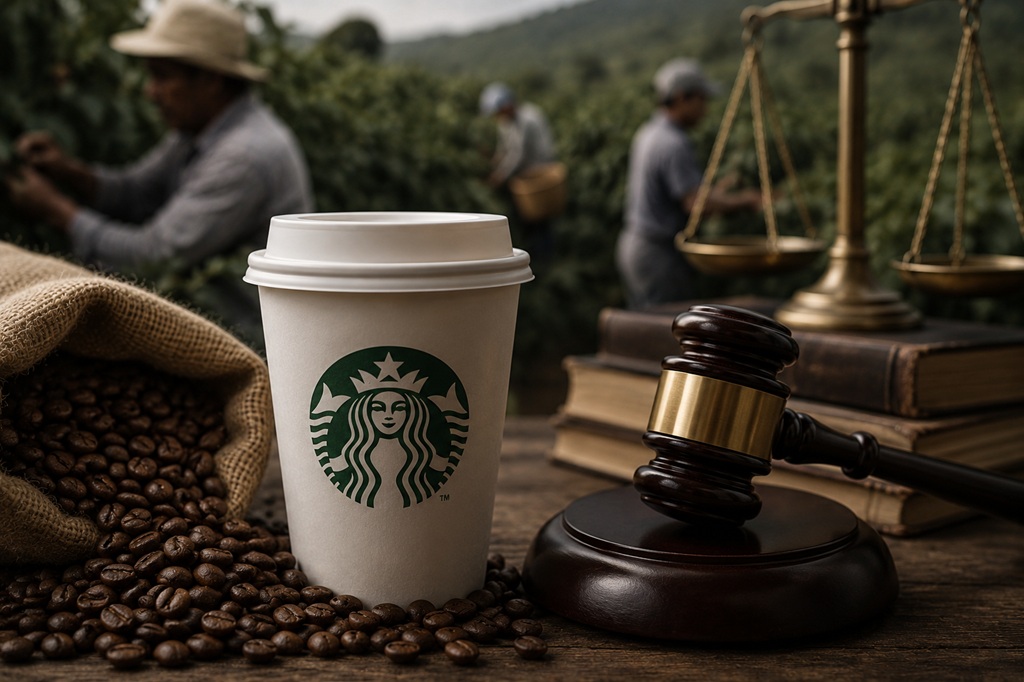
Starbucks Sued Over Brazilian Coffee Farm Forced Labor Allegations
Starbucks Corporation is facing a federal lawsuit alleging that coffee sourced for its supply chain was produced under forced labor and trafficking-like conditions on farms in Brazil. The case was filed by International Rights Advocates (IRAdvocates) on behalf of eight Brazilian workers in the U.S. District Court for the District of Columbia, and it relies on a U.S. anti-trafficking statute rather than typical consumer protection law.
This is a separate legal matter from the 2026 VOC contamination and “ethical sourcing” class action also facing Starbucks — the two cases involve different plaintiffs, different legal theories, and different courts. Here’s what this case is actually about.
What Is the TVPRA, and What Does the Lawsuit Allege?
The lawsuit was brought under the Trafficking Victims Protection Reauthorization Act (TVPRA), a federal law that allows victims of trafficking to sue companies that knowingly benefit from forced labor in their supply chains, even when the abuse happens overseas. Unlike consumer protection statutes, the TVPRA doesn’t require the plaintiffs to be customers of the company — it’s built specifically for people who were personally trafficked or forced into labor.
The eight plaintiffs worked on coffee farms connected to Cooxupé, described in the complaint as Brazil’s largest coffee cooperative and a major supplier feeding into Starbucks’ coffee sourcing network. The workers allege they were recruited and controlled through a system known locally as the “gato” arrangement — an informal labor broker who recruits workers, often in poor or vulnerable communities, and then controls their pay, housing, and movement, frequently trapping them in debt to the broker before they’ve earned a single wage.
Details of the Alleged Abuse
According to the complaint, conditions on the farms included:
- Workdays start around 5:30 a.m. and run until 6 p.m.
- A single 20-minute lunch break
- Recruitment of at least one worker who was reportedly 16 years old at the time
- Wages withheld or reduced through debt owed to labor brokers, a pattern commonly referred to as debt bondage
Brazil’s own labor ministry has previously documented similar conditions on coffee farms in the region, which the complaint cites as corroborating evidence. These allegations describe conditions that Brazilian and international law classify as forced labor, regardless of whether physical restraint was involved — control through debt and dependency is treated as a form of coercion under trafficking law.
Starbucks’ Response to the Allegations
Starbucks has called the lawsuit “without merit.” The company has stated that Cooxupé represents a small fraction of the roughly 19,000 farms in its overall coffee supply network, and that its suppliers are required to meet the standards set out in its Coffee and Farmer Equity (C.A.F.E.) Practices program, which includes third-party audits of labor conditions.
Starbucks has not been found liable at this stage, and the case remains in early proceedings.
How TVPRA Cases Typically Proceed
Cases filed under the TVPRA generally move through several stages before any judgment is reached:
- Filing and service— the complaint is filed, and Starbucks is formally notified.
- Motion to dismiss— the defendant typically challenges whether the claims meet the legal threshold for liability (this stage is where the case currently stands).
- Discovery— if the case survives dismissal, both sides exchange evidence, including supply chain audit records and cooperative agreements.
- Trial or settlement— TVPRA cases can end in a negotiated settlement or proceed to trial; either outcome can take years.
This timeline matters because early-stage lawsuits often generate headlines well before any factual findings are made by a court.
Broader Context — Coffee Industry & Brazil
Brazil produces roughly a third of the world’s coffee supply, and labor conditions on its farms have drawn scrutiny for years. Brazilian authorities operate an active anti-slavery labor inspection program, and government data have periodically flagged coffee-growing regions, including areas tied to Cooxupé-linked farms, for labor violations. Advocacy groups argue that certification programs run by coffee buyers don’t always catch abuses happening several layers down the supply chain, particularly when labor is subcontracted through independent brokers rather than the farm owner directly.
Is This a Consumer Class Action?
No — and this is an important distinction from the separate VOC/ethical sourcing case Starbucks is also facing. This lawsuit was filed by the workers themselves, not by consumers, and it isn’t seeking class certification on behalf of Starbucks customers. It’s a targeted case under a federal anti-trafficking statute, brought directly by people who say they were personally affected. U.S. coffee buyers are not part of the plaintiff class in this case and cannot join it as claimants.
FAQs
Can US consumers join this lawsuit?
No. This case was filed by eight Brazilian farm workers under the federal Trafficking Victims Protection Reauthorization Act, not as a consumer class action. There is no consumer claims process, settlement fund, or sign-up form tied to this case, and U.S. coffee buyers cannot become claimants regardless of how much Starbucks coffee they’ve purchased.
What is Cooxupé?
Cooxupé is described in the complaint as Brazil’s largest coffee cooperative, representing thousands of member farms across coffee-growing regions of the country. It functions as a supplier feeding into Starbucks’ broader sourcing network, though Starbucks states it represents only a small fraction of its roughly 19,000-farm supply chain.
Has Starbucks faced similar allegations before?
Labor conditions in coffee supply chains have been a recurring industry-wide concern, not unique to Starbucks. Starbucks has previously pointed to its C.A.F.E. Practices certification program, which includes third-party labor audits, as its primary safeguard against these issues across its supplier network.
What happens if Starbucks loses this case?
A judgment against Starbucks in a TVPRA case could result in monetary damages awarded directly to the eight plaintiffs and increased regulatory or public scrutiny of the company’s supply chain auditing practices. It would not create a consumer settlement fund or trigger payouts to Starbucks customers.
Is Starbucks coffee still safe to buy?
The lawsuit concerns labor conditions during sourcing, not product safety or health risks, so it doesn’t raise food-safety concerns for consumers. Buyers concerned about supply chain ethics can look for third-party certifications like Fair Trade or Rainforest Alliance in addition to Starbucks’ own C.A.F.E. Practices program.
Related Lawsuits
Starbucks is also facing a separate 2026 class action alleging its “100% Ethical Sourcing” marketing was misleading and that industrial solvents were found in one of its coffee blends. Read our full breakdown: Starbucks Coffee Lawsuit 2026: VOC Contamination & Ethical Sourcing Claims.
This article is for informational purposes only and does not constitute legal advice. Claims described in this article are allegations from a civil complaint and have not been proven in court. Starbucks denies wrongdoing.

Sadia Parveen is a content writer at ClassAction24.com who creates informational articles on class action lawsuits, consumer protection matters, and legal developments. Her work focuses on researching publicly available information and presenting it in a clear and neutral format for general readers. She does not provide legal advice or professional legal services.